
How Real-World Projects Make You More Employable Than Certificates Alone (2026 Career Guide)
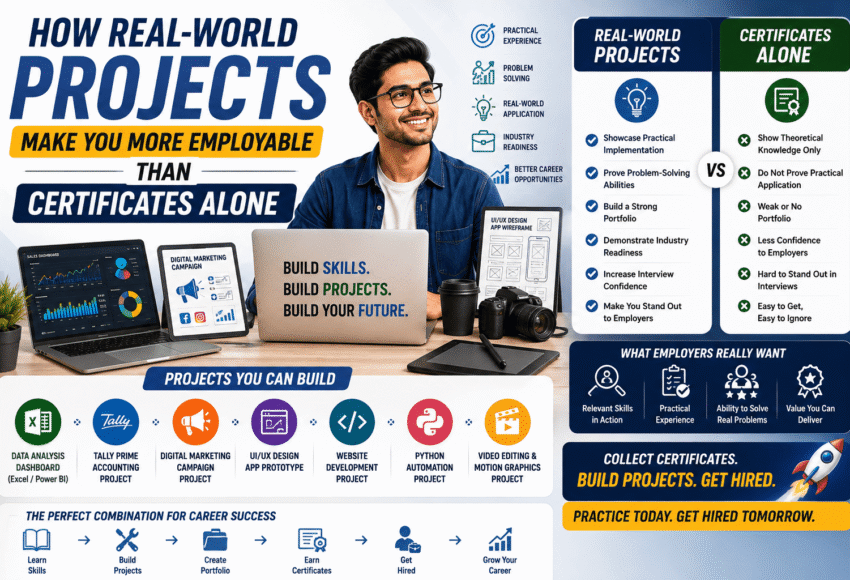
Professional certifications help validate your knowledge, but employers increasingly want proof that you can apply your skills in real-world situations. In today’s competitive job market, recruiters often look beyond certificates to evaluate practical experience, project portfolios, internships, problem-solving ability, and workplace readiness.
Whether you’re learning Tally Prime, Advanced Excel, Data Analytics, Python, Power BI, Digital Marketing, UI/UX Design, Graphic Design, Website Development, Motion Graphics, Video Editing, or AI tools, completing real-world projects helps you demonstrate your abilities with confidence.
This guide explains why project-based learning has become essential for career success, how to build a strong portfolio, and how combining certifications with practical experience can significantly improve your employability in 2026.
Why Employers Value Practical Experience
Modern businesses need professionals who can contribute from day one.
Recruiters often evaluate candidates based on their ability to:
- Solve business problems
- Apply technical knowledge
- Work with industry-standard tools
- Collaborate in teams
- Adapt to changing technologies
- Learn independently
Certificates indicate learning, while projects demonstrate application.
Certificates vs Real-World Projects
| Certificates | Real-World Projects |
|---|---|
| Show completed training | Demonstrate practical skills |
| Validate theoretical knowledge | Prove problem-solving ability |
| Build credibility | Build confidence |
| Strengthen resumes | Strengthen portfolios |
| Help during resume shortlisting | Help during interviews and technical assessments |
The strongest profile combines both.
Why Projects Matter More in 2026
Employers increasingly ask:
- What have you built?
- Which software have you used?
- Can you solve practical business problems?
- Have you worked on real datasets or client scenarios?
- Can you explain your decision-making process?
Projects provide answers to these questions.
Benefits of Project-Based Learning
1. Builds Practical Skills
Projects help you apply classroom concepts to real situations.
Examples include:
- Designing dashboards
- Creating websites
- Managing marketing campaigns
- Developing automation scripts
- Producing video content
- Preparing financial reports
Practical application strengthens understanding.
2. Creates a Professional Portfolio
A portfolio showcases your work to employers.
Examples:
Data Analytics
- Sales Dashboard
- HR Dashboard
- Financial Reports
- Power BI Visualizations
Finance
- GST Filing Simulation
- Payroll Processing
- Tally Prime Accounting
- Budget Analysis
Digital Marketing
- SEO Audit
- Social Media Campaign
- Google Ads Strategy
- Content Calendar
Graphic Design
- Brand Identity
- Logo Design
- Social Media Creatives
- Marketing Brochures
UI/UX Design
- Mobile App Prototype
- Website Wireframes
- User Research Reports
Website Development
- Responsive Website
- Landing Page
- Portfolio Website
Python Programming
- Expense Tracker
- Data Cleaning Script
- Automon Tool
- API Integration
Motion Graphics & Video Editing
- Product Explainer Video
- Promotional Animation
- Social Media Reels
- Corporate Presentation Video
Projects Improve Interview Performance
Interviewers often ask candidates to explain:
- Their role in a project
- Challenges faced
- Tools used
- Results achieved
- Lessons learned
Candidates with project experience can provide detailed, practical examples.
Projects Demonstrate Problem-Solving
Every project requires decisions.
Examples:
- Cleaning inconsistent data
- Improving website usability
- Optimizing digital marketing campaigns
- Automating repetitive tasks
- Creating engaging visual content
These experiences help employers understand how you approach challenges.
The Role of AI in Practical Learning
AI can support project work by helping you:
- Research ideas
- Analyze data
- Generate content drafts
- Automate repetitive tasks
- Improve productivity
Learning how to use AI responsibly alongside your technical expertise is becoming increasingly valuable.
Industry-Specific Project Ideas
Finance & Accounting
Projects:
- Company Ledger
- GST Reports
- Payroll System
- Financial Statement Analysis
Data Analytics
Projects:
- Business Dashboard
- Customer Insights
- Sales Performance Analysis
- Data Visualization Reports
Digital Marketing
Projects:
- SEO Optimization
- Keyword Research
- Social Media Campaign
- Website Analytics
Graphic Design
Projects:
- Logo Collection
- Brand Guidelines
- Packaging Design
- Event Posters
UI/UX Design
Projects:
- E-commerce App
- Banking Dashboard
- Healthcare Portal
- Food Delivery App
Website Development
Projects:
- Business Website
- Educational Portal
- Personal Portfolio
- Service Booking Platform
Python Programming
Projects:
- Inventory Management
- Attendance System
- Data Automation
- Report Generator
Video Editing & Motion Graphics
Projects:
- Brand Advertisement
- Animated Explainer
- Product Launch Video
- Educational Animation
How to Build an Impressive Portfolio
Your portfolio should include:
- Project title
- Objective
- Tools used
- Process
- Screenshots or visuals
- Outcomes
- Key learnings
Keep your work organized and easy to present during interviews.
Combine Certifications with Practical Projects
The ideal learning approach is:
Learn → Practice → Build → Improve → Showcase
For example:
Advanced Excel → Business Dashboard
Python → Automation Script
Graphic Design → Brand Identity Project
Digital Marketing → SEO Campaign
Tally Prime → Accounting Simulation
This progression demonstrates applied knowledge.
Soft Skills Developed Through Projects
Projects also strengthen:
- Communication
- Teamwork
- Leadership
- Time Management
- Critical Thinking
- Adaptability
- Presentation Skills
These workplace competencies are highly valued by employers.
Why Ahmedabad Supports Practical Learning
Ahmedabad offers opportunities in:
- IT Services
- Finance
- Manufacturing
- Digital Marketing
- Creative Design
- Startups
- Professional Education
Students and professionals can participate in internships, workshops, industry projects, and practical training to strengthen their portfolios.
Common Mistakes Students Make
Collecting Certificates Without Practice
Certificates are valuable, but applying the knowledge through projects creates stronger evidence of your abilities.
Not Building a Portfolio
A portfolio helps employers evaluate your practical work.
Copying Projects Without Understanding
Focus on projects you can confidently explain and improve.
Ignoring Feedback
Refining your work based on feedback leads to stronger skills.
Stopping After One Project
Continue building new projects as your expertise grows.
Practical Learning Roadmap
| Stage | Goal | Outcome |
|---|---|---|
| Stage 1 | Learn Core Concepts | Build Knowledge |
| Stage 2 | Complete Guided Projects | Gain Practical Skills |
| Stage 3 | Build Independent Projects | Improve Problem-Solving |
| Stage 4 | Create Portfolio | Showcase Capabilities |
| Stage 5 | Earn Certifications | Validate Skills |
| Stage 6 | Apply for Internships & Jobs | Build Professional Experience |
Frequently Asked Questions (FAQs)
1. Are certificates enough to get a job?
Certificates can strengthen your profile, but employers often look for practical experience, projects, and evidence that you can apply your skills in real-world situations.
2. Why are projects important?
Projects demonstrate technical ability, problem-solving, and familiarity with industry tools, making it easier for employers to evaluate your capabilities.
3. Should freshers build a portfolio?
Yes. A portfolio of academic, personal, or internship projects can help compensate for limited work experience.
4. Can AI help with project work?
AI can support research, automation, content generation, and productivity. However, understanding the underlying concepts and being able to explain your work remains essential.
5. Which projects should I include in my portfolio?
Choose projects that are relevant to your target role and highlight your technical skills, creativity, and problem-solving abilities.
6. Are internships better than projects?
Both provide valuable experience. Internships expose you to professional environments, while personal or academic projects help you practice and demonstrate your skills.
7. Is Ahmedabad a good place for project-based learning?
Yes. Ahmedabad has a growing ecosystem of technology companies, startups, financial institutions, creative agencies, and training centers that provide opportunities for practical learning.
8. How many projects should I complete?
Quality matters more than quantity. A few well-executed, documented projects are often more valuable than many incomplete ones.
Conclusion
In 2026, employers increasingly seek professionals who can demonstrate skills—not just describe them. While industry certifications validate your learning, real-world projects prove your ability to solve problems, use professional tools, and deliver meaningful results.
Whether you’re building expertise in Tally Prime, Advanced Excel, Data Analytics, Digital Marketing, UI/UX Design, Graphic Design, Website Development, Python Programming, Motion Graphics, Video Editing, or AI-enabled workflows, combining structured learning with practical projects will make your profile stronger and more competitive.
Focus on creating a portfolio, completing hands-on projects, and continuously improving your skills. Together with relevant certifications, practical experience can help you stand out in interviews, adapt to evolving industry expectations, and build a successful, future-ready career.


Leave a Comment