
Why Learn C & C++ Programming? Complete Career Guide for Beginners in 2026
C and C++ remain among the most powerful and widely used programming languages in the world. From operating systems and embedded devices to game development, robotics, artificial intelligence, and high-performance software, these languages continue to drive modern technology. For beginners looking to build a strong programming foundation and explore high-paying technology careers, learning C and C++ is an excellent choice.
This complete career guide explains why C and C++ are still relevant in 2026, the benefits of learning them, career opportunities, salary prospects, required skills, and the best learning roadmap for beginners.
Why Learn C & C++ Programming in 2026?
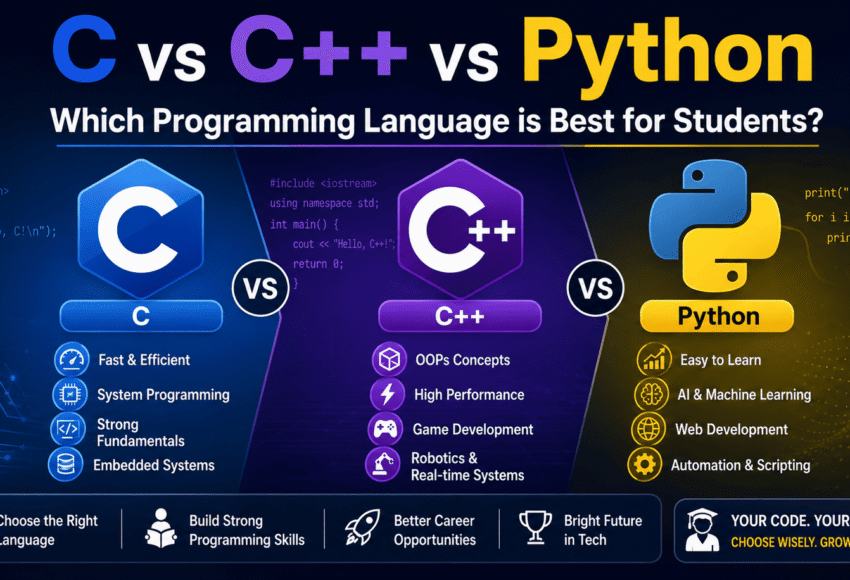
Many students wonder whether they should learn newer languages such as Python or JavaScript instead of C and C++. While modern languages are important, C and C++ provide a deeper understanding of programming concepts and computer systems.
Key Reasons to Learn C & C++
- Build a strong programming foundation
- Understand memory management and system architecture
- Develop high-performance applications
- Create operating systems and system software
- Enter game development and graphics programming
- Work in robotics, IoT, and embedded systems
- Prepare for software engineering interviews
- Learn data structures and algorithms effectively
- Access diverse career opportunities across industries
Because of their speed and efficiency, C and C++ continue to be used by leading technology companies worldwide.
What is C Programming?
C is a general-purpose programming language developed for system programming and software development. It is often called the “Mother of Programming Languages” because many modern languages are derived from it.
Features of C Programming
- Fast execution speed
- Structured programming approach
- Portable across platforms
- Efficient memory management
- Ideal for system-level programming
Applications of C
- Operating systems
- Device drivers
- Embedded systems
- Compilers
- Database systems
- Networking applications
What is C++ Programming?
C++ is an extension of C that introduces object-orientated programming (OOP) concepts and advanced software development capabilities.
Features of C++
- Object-Oriented Programming
- Encapsulation
- Inheritance
- Polymorphism
- Abstraction
- High performance
- Standard Template Library (STL)
Applications of C++
- Game development
- Software applications
- Financial systems
- Artificial intelligence
- Machine learning engines
- Real-time systems
- Robotics
- Graphics and simulation software
Benefits of Learning C & C++ for Beginners
1. Strong Programming Fundamentals
C and C++ teach core concepts, including:
- Variables
- Loops
- Functions
- Arrays
- Pointers
- Memory allocation
- Data structures
- Algorithms
These concepts help learners master other programming languages faster.
2. Better Understanding of Computer Systems
Unlike many modern languages, C and C++ provide direct interaction with memory and hardware, helping students understand how computers actually work.
3. Excellent for Coding Interviews
Major technology companies test candidates on:
- Data Structures
- Algorithms
- Problem Solving
- Competitive Programming
C++ is one of the most preferred languages for technical interviews.
4. High-Speed Performance
C and C++ are among the fastest programming languages, making them suitable for applications where speed and efficiency matter.
5. Versatile Career Opportunities
Professionals skilled in C and C++ can work across multiple domains, including:
- Software Development
- Cybersecurity
- Embedded Systems
- Robotics
- AI Development
- Automotive Technology
- Aerospace Engineering
Career Opportunities After Learning C & C++
The demand for skilled C and C++ developers remains strong across industries.
1. Software Developer
Design and develop desktop applications, enterprise software, and business solutions.
Skills Required
- C Programming
- C++
- OOP Concepts
- Algorithms
- Debugging
2. System Programmer
Develop operating systems, compilers, and low-level software.
Industries
- Technology
- Government
- Defense
- Cloud Computing
3. Embedded Systems Engineer
Create software for devices and hardware systems.
Examples
- Smart TVs
- Medical Equipment
- IoT Devices
- Smart Home Systems
4. Game Developer
Many game engines and gaming applications rely heavily on C++.
Responsibilities
- Game Logic Development
- Graphics Programming
- Physics Simulation
- Performance Optimization
5. Robotics Engineer
Build software that powers robots and automation systems.
Industries
- Manufacturing
- Healthcare
- Logistics
- Automation
6. Automotive Software Engineer
Modern vehicles use embedded systems programmed using C and C++.
Applications
- Autonomous Vehicles
- ADAS Systems
- Vehicle Control Systems
7. Cybersecurity Analyst
Security tools and operating systems often rely on C and C++ programming knowledge.
Key Areas
- Vulnerability Research
- Reverse Engineering
- Malware Analysis
- Security Testing
8. AI and Machine Learning Engineer
Many AI frameworks and machine learning libraries use C++ for performance optimisation.
Examples
- AI Engines
- Deep Learning Libraries
- High-Performance Computing
Average Salary After Learning C & C++
Salary depends on experience, location, and specialisation.
| Job Role | Entry-Level Salary (India) |
|---|---|
| C Programmer | ₹3 LPA – ₹6 LPA |
| C++ Developer | ₹4 LPA – ₹8 LPA |
| Embedded Engineer | ₹4 LPA – ₹10 LPA |
| Software Engineer | ₹5 LPA – ₹12 LPA |
| Game Developer | ₹4 LPA – ₹10 LPA |
| Robotics Engineer | ₹5 LPA – ₹15 LPA |
| Cybersecurity Professional | ₹6 LPA – ₹18 LPA |
Experienced professionals can earn significantly higher salaries in multinational companies and global markets.
Skills You Should Learn Along with C & C++
To maximise career opportunities, learn:
Technical Skills
- Data Structures
- Algorithms
- Object-Oriented Programming
- Database Management
- Operating Systems
- Computer Networks
- Linux
- Git & GitHub
Soft Skills
- Communication
- Problem Solving
- Analytical Thinking
- Team Collaboration
- Project Management
Step-by-Step Roadmap to Learn C & C++
Step 1: Learn Programming Basics
- Variables
- Data Types
- Operators
- Conditional Statements
- Loops
Step 2: Master Functions and Arrays
- Functions
- Recursion
- Arrays
- Strings
Step 3: Learn Pointers
Pointers are one of the most important concepts in C programming.
Step 4: Understand Data Structures
- Linked Lists
- Stacks
- Queues
- Trees
- Graphs
Step 5: Learn Object-Oriented Programming
- Classes
- Objects
- Constructors
- Inheritance
- Polymorphism
Step 6: Build Real Projects
Examples:
- Student Management System
- Library Management System
- Banking Application
- Inventory Management Software
- Mini Games
Step 7: Practise Coding Problems
Use coding platforms to strengthen problem-solving skills and prepare for interviews.
Who Should Learn C & C++?
C and C++ are ideal for:
- School Students
- College Students
- Engineering Students
- Computer Science Graduates
- Software Development Aspirants
- Game Development Enthusiasts
- Robotics Learners
- Embedded Systems Professionals
- Cybersecurity Beginners
Why C & C++ Skills Will Remain Relevant in the Future
Despite the emergence of new programming languages, C and C++ continue to power:
- Operating Systems
- Gaming Engines
- Embedded Devices
- AI Infrastructure
- Cloud Computing Systems
- High-Frequency Trading Platforms
- Robotics Applications
Organisations require programmers who understand performance optimisation and low-level computing, making C and C++ highly valuable skills even in 2026 and beyond.
Frequently Asked Questions (FAQs)
Is C programming good for beginners?
Yes. C is one of the best programming languages for beginners because it teaches fundamental programming concepts and develops logical thinking skills.
Should I learn C before C++?
Yes. Learning C first helps you understand programming basics before moving to advanced object-orientated concepts in C++.
Is C++ still in demand in 2026?
Absolutely. C++ remains highly demanded in software development, gaming, embedded systems, robotics, finance, and AI industries.
Can I get a job after learning C and C++?
Yes. With practical projects, data structures, algorithms, and problem-solving skills, you can pursue multiple entry-level technology careers.
Which is better: Python or C++?
Both have advantages. Python is easier to learn and widely used in AI and automation, while C++ offers superior performance and deeper programming knowledge.
How long does it take to learn C and C++?
Most beginners can learn the fundamentals within 3 to 6 months with consistent practice and project development.
What industries hire C and C++ programmers?
Industries include software development, gaming, automotive technology, robotics, embedded systems, aerospace, cybersecurity, telecommunications, and finance.
Conclusion
Learning C and C++ is one of the smartest investments for aspiring programmers in 2026. These languages provide a strong foundation in programming, improve problem-solving abilities, and open doors to diverse career opportunities in software development, gaming, robotics, cybersecurity, embedded systems, and artificial intelligence.
Whether you are a student, graduate, or career changer, mastering C and C++ can help you build technical expertise, secure high-paying jobs, and stay competitive in the rapidly evolving technology industry. Start with the fundamentals, practise consistently, build real-world projects, and create a strong portfolio to accelerate your journey toward becoming a successful software professional.



Leave a Comment