
UI/UX Designer vs Front-End Developer: Which Career is Better in 2026?
The demand for digital professionals is growing rapidly as businesses invest in websites, mobile apps, SaaS platforms, and digital products. Among the most sought-after careers are UI/UX Design and Front-End Development. While these professions work closely together, they have distinct responsibilities, skill sets, and career paths.
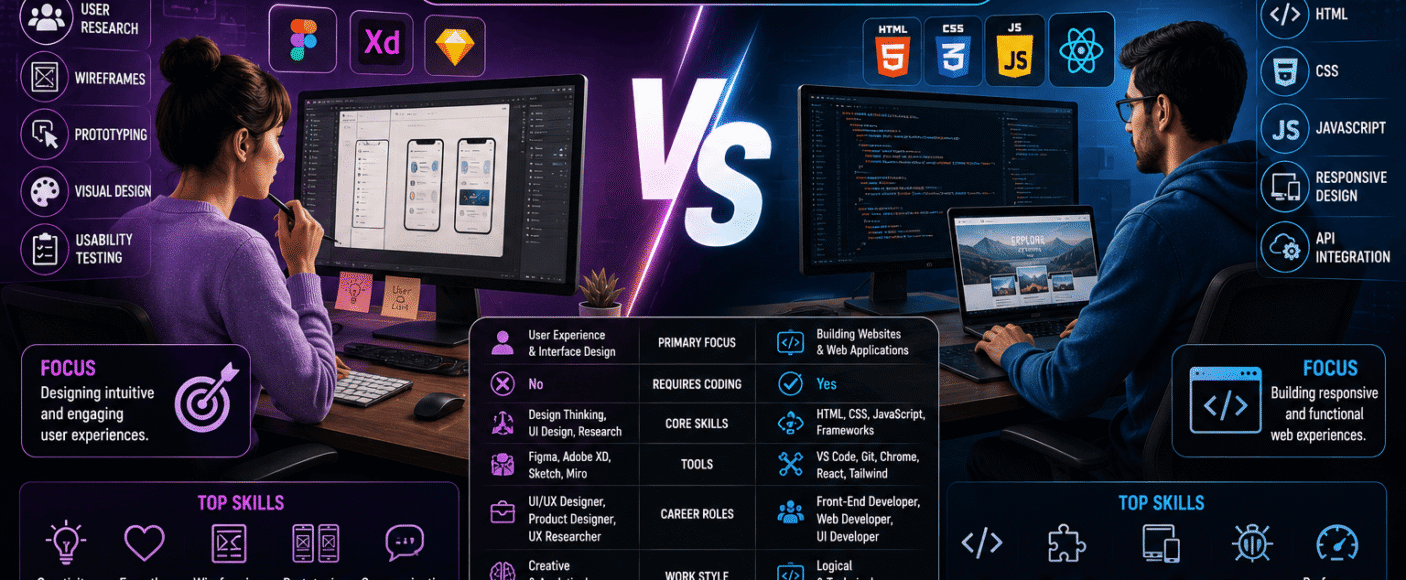
UI/UX Designers focus on creating intuitive, engaging, and visually appealing user experiences, whereas Front-End Developers transform those designs into functional, responsive, and interactive websites or applications using code.
If you’re deciding between these two exciting career options, this guide compares UI/UX Design vs Front-End Development based on job roles, salary, skills, software, coding requirements, future demand, and career growth to help you make the right choice.
What is UI/UX Design?
UI (User Interface) Design focuses on the look and feel of digital products, while UX (User Experience) Design ensures those products are easy to use, accessible, and solve user needs effectively.
UI/UX Designers are responsible for:
- User Research
- Wireframing
- Prototyping
- User Journey Mapping
- Information Architecture
- Interface Design
- Responsive Layout Design
- Usability Testing
- Accessibility Improvements
- Design Systems
Their primary goal is to create enjoyable and efficient digital experiences.
What is Front-End Development?
Front-End Development involves building the visual and interactive parts of websites and web applications using programming languages and frameworks. Front-end developers ensure that designs work smoothly across devices and browsers.
Typical responsibilities include:
- Website Development
- Responsive Design Implementation
- Interactive Features
- Performance Optimization
- Browser Compatibility
- API Integration
- User Interface Development
- Accessibility Implementation
- Code Maintenance
- Debugging
They bridge the gap between design and functionality.
UI/UX Designer vs Front-End Developer: Quick Comparison
| Feature | UI/UX Designer | Front-End Developer |
|---|---|---|
| Primary Focus | User Experience & Interface Design | Website & App Development |
| Creativity | Very High | High |
| Coding Requirement | Not Mandatory | Essential |
| Problem Solving | User-Centered | Technical |
| Main Deliverables | Wireframes, Prototypes, UI Designs | Responsive Websites & Applications |
| Tools | Figma, Adobe XD, Sketch | VS Code, HTML, CSS, JavaScript |
| Collaboration | Developers, Product Teams | Designers, Back-End Developers |
| Remote Opportunities | High | High |
| Freelancing | Excellent | Excellent |
Skills Required for UI/UX Designers
Professional UI/UX Designers should develop skills in:
- User Research
- Wireframing
- Prototyping
- Interaction Design
- Visual Design
- Information Architecture
- Design Thinking
- Responsive Design
- Accessibility
- Usability Testing
- Design Systems
- Communication
- Collaboration
Understanding basic HTML and CSS can improve collaboration with developers, but coding is not usually required.
Skills Required for Front-End Developers
Front-End Developers need technical expertise in:
- HTML5
- CSS3
- JavaScript
- Responsive Web Design
- React
- Vue.js or Angular (depending on the role)
- Version Control (Git)
- API Integration
- Performance Optimization
- Cross-Browser Compatibility
- Web Accessibility
- Debugging and Testing
Strong problem-solving and analytical thinking are essential.
Software and Tools Used by UI/UX Designers
Common design tools include:
- Figma
- Adobe XD
- Sketch
- FigJam
- Miro
- Adobe Photoshop
- Adobe Illustrator
- InVision
- Zeplin
- ProtoPie
AI-powered design features are increasingly helping designers with ideation, layout suggestions, and prototyping.
Tools Used by Front-End Developers
Developers commonly use:
- Visual Studio Code
- Git & GitHub
- Chrome DevTools
- React
- Angular
- Vue.js
- Bootstrap
- Tailwind CSS
- npm
- Webpack
- Vite
AI coding assistants are also helping developers write, review, and optimize code more efficiently.
Career Opportunities for UI/UX Designers
UI/UX professionals can work as:
- UI Designer
- UX Designer
- Product Designer
- UX Researcher
- Interaction Designer
- Visual Designer
- Mobile App Designer
- Web Designer
- Design System Specialist
- Experience Designer
Industries hiring UI/UX professionals include:
- IT Companies
- SaaS Businesses
- FinTech
- Healthcare Technology
- EdTech
- E-commerce
- Startups
- Product-Based Companies
Career Opportunities for Front-End Developers
Front-End Developers can pursue roles such as:
- Front-End Developer
- Web Developer
- React Developer
- JavaScript Developer
- UI Developer
- Web Application Developer
- Software Engineer (Front-End)
- Mobile Web Developer
- Full-Stack Developer (with back-end skills)
- Technical Consultant
Industries include:
- Software Development Companies
- IT Services
- E-commerce
- Digital Agencies
- Product Companies
- Banking & Finance
- Healthcare
- Education Technology
Salary Comparison
Salary varies depending on skills, location, experience, and employer.
UI/UX Designer Salary
Freshers:
- ₹4–8 LPA
Experienced Professionals:
- ₹8–18+ LPA
Senior Product Designers and UX Specialists working in product companies often earn higher packages.
Front-End Developer Salary
Freshers:
- ₹4–9 LPA
Experienced Professionals:
- ₹8–20+ LPA
Developers with expertise in modern JavaScript frameworks, performance optimization, and scalable applications are highly sought after.
Future Scope of UI/UX Design
Demand for UI/UX professionals continues to grow because of:
- Mobile App Development
- Digital Product Innovation
- SaaS Expansion
- E-commerce Growth
- AI-Powered Applications
- Customer Experience Optimization
- Smart Devices
- Accessibility Standards
Businesses increasingly recognize that excellent user experiences contribute to customer satisfaction and business success.
Future Scope of Front-End Development
Front-End Development remains a critical part of digital transformation due to:
- Increasing Demand for Web Applications
- Progressive Web Apps (PWAs)
- E-commerce Platforms
- Enterprise Software
- AI-Integrated Interfaces
- Cloud-Based Applications
- Responsive Web Design
- Modern JavaScript Frameworks
As long as websites and applications exist, skilled front-end developers will continue to play a key role.
UI/UX Designer vs Front-End Developer: Which Should You Choose?
Choose UI/UX Design if you enjoy:
- Creativity
- Visual Design
- User Psychology
- Problem Solving
- Research
- Prototyping
- Branding
- User-Centered Thinking
Choose Front-End Development if you enjoy:
- Coding
- Building Websites
- Technology
- JavaScript
- Problem Solving
- Responsive Design
- Interactive Features
- Continuous Technical Learning
Can You Learn Both?
Yes.
Many professionals develop both UI/UX design and front-end development skills, enabling them to create and implement complete digital experiences. Understanding design principles helps developers build better interfaces, while basic coding knowledge can improve collaboration for designers.
Professionals with expertise in both areas are often well-positioned for roles such as Product Designer, UI Engineer, or Full-Stack Designer, depending on their experience.
Why Choose a Professional Training Institute?
A quality training program should provide:
- Industry-Relevant Curriculum
- Practical Projects
- Portfolio Development
- Latest Software & Framework Training
- AI-Assisted Workflows
- Expert Mentorship
- Internship Opportunities
- Placement Assistance
- Soft Skills Training
- Career Guidance
Hands-on learning and real-world projects help students build job-ready skills.
Frequently Asked Questions (FAQs)
1. Which is better: UI/UX Design or Front-End Development?
Both offer excellent career opportunities. UI/UX Design is ideal for creative professionals interested in user experience, while Front-End Development is suited to those who enjoy coding and building interactive digital products.
2. Does Front-End Development require coding?
Yes. Front-End Developers use HTML, CSS, JavaScript, and often frameworks such as React, Angular, or Vue.js to build websites and web applications.
3. Can a UI/UX Designer become a Front-End Developer?
Yes. Many UI/UX Designers learn HTML, CSS, and JavaScript to expand their skills. Likewise, developers often study design principles to improve collaboration and product quality.
4. Which career has a higher salary?
Both fields offer competitive salaries. Compensation depends on experience, technical expertise, portfolio, location, and the type of organization. Specialized professionals in either field can command premium salaries.
5. Is coding required for UI/UX Design?
Coding is not mandatory for most UI/UX roles, although basic knowledge of HTML and CSS can be beneficial when working with development teams.
6. Which tools should beginners learn?
UI/UX beginners can start with Figma for interface design and prototyping. Front-End Development beginners should learn HTML, CSS, JavaScript, and a modern code editor such as Visual Studio Code.
7. Is freelancing possible in both careers?
Yes. Both UI/UX Designers and Front-End Developers have strong freelance opportunities, working with startups, agencies, businesses, and international clients.
8. Which field has better future demand?
Both are expected to remain in high demand. As digital products continue to evolve, organizations need professionals who can design intuitive experiences and build reliable, high-performing interfaces.
9. Can I learn UI/UX Design and Front-End Development together?
Yes. Learning both disciplines provides a broader understanding of digital product development and can improve collaboration and career flexibility.
10. Which course is best after the 12th?
The right choice depends on your interests. If you enjoy creativity and user experience, UI/UX Design is a great option. If you enjoy coding and technology, Front-End Development may be a better fit.
Conclusion
Both UI/UX Design and Front-End Development are rewarding, future-focused careers with strong demand across industries. UI/UX Design is best suited for individuals who enjoy creativity, user research, and designing intuitive digital experiences. Front-End Development is ideal for those who enjoy coding, problem-solving, and transforming designs into responsive, interactive applications.
Rather than viewing these fields as competitors, it’s helpful to see them as complementary disciplines. Professionals who understand both design and development often have broader career opportunities and can contribute more effectively to modern digital product teams. By choosing a quality training program, building practical experience, and staying current with emerging technologies, you can build a successful career in either path.



Leave a Comment