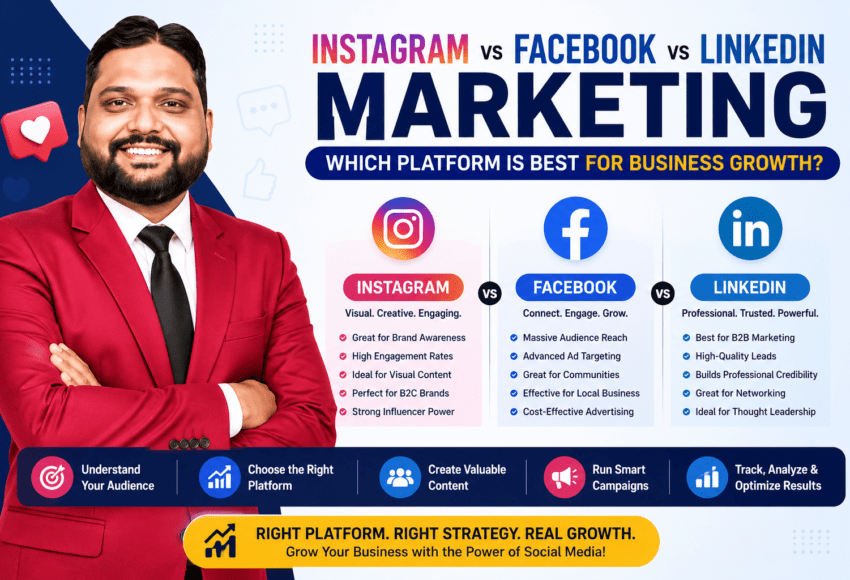
Instagram vs Facebook vs LinkedIn Marketing: Which Platform is Best for Business Growth?
Summary
Choosing the right social media platform can significantly impact your business growth. While Instagram excels in visual storytelling and brand engagement, Facebook remains a powerful platform for community building, local marketing, and paid advertising. LinkedIn, on the other hand, dominates B2B marketing, professional networking, and high-quality lead generation.
This comprehensive guide compares Instagram vs Facebook vs LinkedIn marketing based on audience, business goals, engagement, advertising, costs, lead generation, and ROI to help businesses select the most effective platform in 2026.
Introduction
Social media marketing has become one of the most effective ways for businesses to reach customers, build trust, and increase sales. However, every platform serves a different purpose. A fashion brand may generate outstanding results on Instagram, while a software company may find LinkedIn more effective. Similarly, local businesses often achieve excellent returns through Facebook’s community features and advertising tools. Understanding the strengths and weaknesses of each platform allows businesses to invest their time and marketing budget wisely.
In this guide, we’ll compare Instagram, Facebook, and LinkedIn to help you determine which platform aligns best with your business objectives.
Why Choosing the Right Social Media Platform Matters
Selecting the appropriate platform helps businesses:
- Reach the right audience
- Increase brand awareness
- Generate qualified leads
- Improve customer engagement
- Maximize advertising ROI
- Build long-term customer relationships
- Increase website traffic and conversions
Instagram Marketing Overview
Instagram is one of the most influential visual marketing platforms in 2026, making it ideal for businesses that rely on images, videos, and creative storytelling.
Best For
- Fashion Brands
- Beauty Products
- Food Businesses
- Travel Agencies
- Fitness Coaches
- Influencers
- Restaurants
- Lifestyle Brands
- E-commerce Stores
Key Features
- Reels
- Stories
- Carousels
- Live Streaming
- Shopping Integration
- Creator Collaborations
Advantages
- High engagement rates
- Excellent visual branding
- Strong influencer marketing ecosystem
- Effective product discovery
- Growing social commerce opportunities
Limitations
- Organic reach can fluctuate with algorithm updates
- Consistent content creation is essential
- Less effective for complex B2B sales
Facebook Marketing Overview
Despite increasing competition, Facebook remains one of the largest marketing platforms with billions of active users worldwide.
Best For
- Local Businesses
- Schools
- Hospitals
- Real Estate
- Retail Stores
- Service Providers
- Community Organizations
Key Features
- Business Pages
- Facebook Groups
- Marketplace
- Events
- Messenger
- Meta Ads Manager
Advantages
- Broad audience reach
- Advanced advertising options
- Excellent local targeting
- Strong community-building capabilities
- Cost-effective lead generation
Limitations
- Organic page reach has declined
- Younger audiences may prefer newer platforms
- Competitive advertising environment
LinkedIn Marketing Overview
LinkedIn is the leading professional networking platform and the preferred choice for B2B marketing.
Best For
- IT Companies
- SaaS Businesses
- Consultants
- HR Agencies
- Educational Institutions
- Corporate Training
- Professional Services
Key Features
- Company Pages
- Thought Leadership Content
- Professional Networking
- LinkedIn Ads
- Newsletters
- Lead Generation Forms
Advantages
- High-quality business audience
- Strong B2B lead generation
- Professional credibility
- Higher-value conversions
- Excellent recruitment opportunities
Limitations
- Smaller audience than Facebook
- Higher advertising costs
- Requires professional and educational content
Instagram vs Facebook vs LinkedIn: Feature Comparison
| Feature | |||
|---|---|---|---|
| Primary Audience | Millennials & Gen Z | Broad Audience | Professionals & Decision-Makers |
| Best For | Brand Awareness | Community & Local Marketing | B2B Lead Generation |
| Organic Reach | High with quality content | Moderate | Strong for personal branding |
| Paid Advertising | Excellent | Excellent | Premium targeting |
| Lead Generation | Moderate | High | Excellent |
| Engagement Rate | Very High | Moderate | High |
| Video Marketing | Excellent | Good | Growing |
| Professional Networking | Limited | Limited | Excellent |
| E-commerce | Excellent | Very Good | Limited |
| Personal Branding | High | Moderate | Excellent |
Which Platform is Best for Different Business Types?
E-commerce Businesses
Winner: Instagram
Why?
- Visual product showcases
- Shopping features
- Influencer collaborations
- High engagement
- Short-form video marketing
Local Businesses
Winner: Facebook
Ideal for:
- Local advertisements
- Community engagement
- Customer reviews
- Events
- Business listings
B2B Companies
Winner: LinkedIn
Perfect for:
- Decision-makers
- Corporate networking
- Lead generation
- Industry authority
- Professional branding
Personal Brands
Instagram and LinkedIn work exceptionally well together.
Instagram builds audience engagement.
LinkedIn builds professional credibility.
Educational Institutions
Use all three platforms strategically.
- Instagram for student engagement
- Facebook for parent communication
- LinkedIn for alumni networking and placements
Advertising Comparison
Instagram Ads
Best for:
- Brand awareness
- Product launches
- E-commerce sales
- Influencer campaigns
Facebook Ads
Best for:
- Local marketing
- Lead generation
- Website traffic
- Event promotion
LinkedIn Ads
Best for:
- B2B marketing
- Executive targeting
- Recruitment campaigns
- High-value services
Content Strategy Comparison
Publish:
- Reels
- Stories
- Product photos
- Behind-the-scenes videos
- User-generated content
Share:
- Videos
- Community updates
- Blog articles
- Events
- Customer testimonials
Post:
- Industry insights
- Business case studies
- Professional achievements
- Company updates
- Educational articles
SEO Benefits of Each Platform
- Brand searches
- Visual discovery
- Hashtag optimization
- Local SEO
- Business visibility
- Customer reviews
- Personal branding
- Google indexing of profiles and articles
- Professional search visibility
Future Trends in Social Media Marketing (2026)
Businesses should prepare for:
- AI-assisted content creation
- Short-form video dominance
- Social commerce growth
- Personalized advertising
- Creator partnerships
- Community-first marketing
- First-party data strategies
Best Strategy: Use All Three Platforms
Rather than relying on a single platform, many successful businesses use all three strategically:
- Increase brand awareness
- Showcase products
- Build visual identity
- Build customer communities
- Run local advertising campaigns
- Generate inquiries
- Generate B2B leads
- Build professional authority
- Recruit talent
- Network with industry leaders
An integrated approach allows businesses to reach different audiences at various stages of the customer journey.
Frequently Asked Questions (FAQs)
1. Which platform is best for small businesses?
Facebook is an excellent choice for local visibility and affordable advertising, while Instagram helps build brand awareness. Using both together often delivers the best results.
2. Is Instagram better than Facebook for marketing?
Instagram generally offers higher engagement and stronger visual storytelling, whereas Facebook excels in community building, local targeting, and lead generation. The better choice depends on your business goals.
3. Why is LinkedIn the preferred platform for B2B marketing?
LinkedIn connects businesses directly with professionals, executives, recruiters, and decision-makers, making it highly effective for B2B networking, lead generation, and thought leadership.
4. Should startups use all three platforms?
Yes. Startups can maximise reach by using Instagram for brand awareness, Facebook for customer engagement and advertising, and LinkedIn for partnerships, recruitment, and business growth.
5. Which platform provides the best return on investment (ROI)?
ROI varies by industry and objective. Instagram often performs best for consumer brands; Facebook is strong for local businesses and paid campaigns, while LinkedIn typically delivers the highest-quality leads for B2B organisations.
Conclusion
Instagram, Facebook, and LinkedIn each offer unique strengths that can contribute to business success in 2026. Instagram is ideal for visually driven brands seeking engagement and product discovery. Facebook remains a powerful platform for community building, local marketing, and cost-effective advertising. LinkedIn stands out as the leading choice for B2B marketing, professional networking, and high-value lead generation.
Instead of viewing these platforms as competitors, businesses should consider them complementary. A well-planned multi-platform strategy enables you to connect with diverse audiences, strengthen your brand, generate qualified leads, and achieve sustainable business growth. By aligning your platform selection with your target audience and marketing objectives, you can build a stronger digital presence and maximize your long-term return on investment