
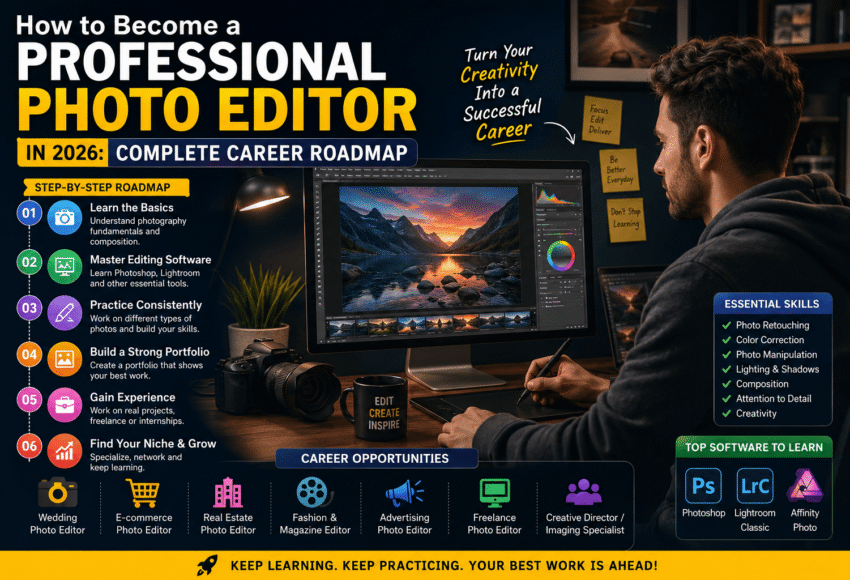
How to Become a Professional Photo Editor in 2026: Complete Career Roadmap
Summary
The demand for professional photo editors is growing rapidly as businesses, photographers, influencers, eCommerce brands, media companies, and digital marketing agencies rely heavily on high-quality visual content. Whether it’s product photography, wedding albums, social media posts, advertisements, or magazine covers, every image needs professional editing before publication.
If you’re creative, detail-orientated, and enjoy working with images, becoming a professional photo editor can be a rewarding and high-paying career in 2026.
This complete guide explains everything you need to know—from essential skills and software to certifications, salaries, career opportunities, and a step-by-step roadmap to becoming a successful photo editor.
Who is a professional photo editor?
A professional photo editor enhances, retouches, manipulates, and optimises digital images using advanced editing software. Their work ensures photographs are visually appealing, technically perfect, and suitable for their intended purpose.
Professional photo editors work across industries such as:
- Photography Studios
- Advertising Agencies
- Digital Marketing Companies
- Fashion Industry
- Film & Entertainment
- E-commerce Businesses
- Real Estate Companies
- News & Media
- Printing & Publishing
- Freelancing Platforms
Why Choose Photo Editing as a Career in 2026?
The digital economy is creating an unprecedented demand for skilled image editors.
Major reasons include:
- Growth of eCommerce businesses
- Rising influencer marketing
- Social media content creation
- AI-assisted editing tools
- Online advertising
- Digital branding
- Professional photography services
- Real estate marketing
- Online education
With AI automating repetitive tasks, professional editors now focus more on creativity, storytelling, and advanced retouching—making human expertise even more valuable.
Skills Required to Become a Professional Photo Editor
Successful photo editors combine creativity with technical expertise.
Technical Skills
- Image Retouching
- Background Removal
- Color Correction
- Color Grading
- Skin Retouching
- Photo Manipulation
- RAW Image Processing
- Photo Restoration
- Batch Editing
- Layer Management
- Masking Techniques
- Lighting Adjustments
- Typography Basics
- File Export Optimization
Creative Skills
- Visual Creativity
- Composition Knowledge
- Color Theory
- Branding Awareness
- Attention to Detail
- Storytelling Through Images
- Design Thinking
Soft Skills
- Communication
- Time Management
- Client Handling
- Problem Solving
- Project Management
- Team Collaboration
Best Photo Editing Software to Learn in 2026
A professional photo editor should master industry-standard software.
1. Adobe Photoshop
The world’s most popular photo editing software for:
- Retouching
- Photo Manipulation
- Graphic Design
- Compositing
- Digital Art
2. Adobe Lightroom
Ideal for:
- Wedding Photography
- Event Photography
- Batch Editing
- RAW Image Processing
- Color Correction
3. Capture One
Preferred by professional photographers for:
- Studio Photography
- High-End Color Editing
- Tethered Shooting
4. Affinity Photo
An affordable alternative offering professional-grade editing features.
5. Canva Pro
Useful for:
- Social Media Graphics
- Marketing Content
- Quick Image Editing
Step-by-Step Roadmap to Become a Professional Photo Editor
Step 1: Learn Photography Basics
Understand:
- Exposure
- Aperture
- ISO
- Shutter Speed
- White Balance
- Composition
Knowing how photos are captured helps you edit them more effectively.
Step 2: Master Photoshop
Focus on:
- Layers
- Masks
- Selection Tools
- Smart Objects
- Filters
- Healing Tools
- Blend Modes
- Adjustment Layers
Step 3: Learn Lightroom
Practice:
- Color Grading
- Presets
- Batch Processing
- Lens Corrections
- RAW Workflow
Step 4: Practise Daily
Edit different types of images:
- Portraits
- Landscapes
- Products
- Food
- Fashion
- Wildlife
- Architecture
- Weddings
- Events
Step 5: Build an Impressive Portfolio
Your portfolio should include:
- Before & After Images
- Product Editing
- Beauty Retouching
- Fashion Editing
- Wedding Photos
- Real Estate Images
- Creative Manipulations
Step 6: Learn AI Editing Tools
Modern editors use AI for faster workflows.
Popular AI features include:
- Generative Fill
- Object Removal
- AI Background Replacement
- AI Noise Reduction
- AI Upscaling
- Smart Selection
Professionals who combine AI efficiency with creative expertise have a competitive advantage.
Step 7: Gain Real Experience
Work on:
- Freelance Projects
- Photography Studios
- Internships
- Digital Agencies
- Local Businesses
Experience improves both skills and credibility.
Career Opportunities After Learning Photo Editing
Professional editors have diverse career options.
1. Professional Photo Editor
Edit images for businesses, photographers, and publishers.
2. Wedding Photo Editor
Specialise in wedding albums and event photography.
3. Fashion Retoucher
Work with fashion brands and magazines.
4. Product Photo Editor
Edit product images for online marketplaces and eCommerce stores.
5. Real Estate Photo Editor
Enhance property photos to improve listings and sales.
6. Digital Imaging Specialist
Manage advanced image enhancement and restoration projects.
7. Graphic Designer
Combine photo editing with creative design for marketing materials.
8. Social Media Content Designer
Create visually engaging graphics and edited photos for digital campaigns.
9. Freelance Photo Editor
Serve clients globally through online platforms.
10. Creative Director
Lead visual branding and creative teams after gaining industry experience.
Industries Hiring Professional Photo Editors
- Photography Studios
- Advertising Agencies
- Media Houses
- Marketing Companies
- eCommerce Companies
- Fashion Brands
- Printing Presses
- Publishing Houses
- Film Production Companies
- Real Estate Firms
- Travel Companies
- Educational Institutions
- Freelancing Platforms
- Startups
Salary of a Professional Photo Editor in 2026
Approximate annual salary ranges:
| Experience | Average Salary |
|---|---|
| Fresher | ₹2.5 – ₹4.5 LPA |
| 2–4 Years | ₹5 – ₹8 LPA |
| 5–8 Years | ₹8 – ₹15 LPA |
| Senior Professional | ₹15 – ₹30+ LPA |
| Freelancers | ₹50,000 – ₹300,000+ per month (depending on clients and projects) |
Income varies based on expertise, location, niche, and portfolio quality.
Best Certifications for Photo Editors
Recommended certifications include:
- Adobe Photoshop Certification
- Adobe Certified Professional
- Lightroom Certification
- Graphic Design Certification
- Digital Imaging Certification
- Professional Photo Retouching Course
Industry-recognised certifications enhance employability and demonstrate validated skills.
Tips to Become a Successful Photo Editor
- Practice every day.
- Follow modern editing trends.
- Learn AI-powered workflows.
- Build a niche (fashion, wedding, product, etc.).
- Maintain a strong online portfolio.
- Understand client requirements thoroughly.
- Focus on realistic and high-quality edits.
- Keep learning new tools and techniques.
- Develop a personal editing style.
- Network with photographers and creative professionals.
Future Scope of Photo Editing
The future remains promising due to increasing demand for digital content across industries.
Emerging trends include:
- AI-assisted editing
- Virtual photography
- eCommerce image optimization
- Social media branding
- High-end retouching
- Visual content marketing
- 3D image compositing
- Generative AI workflows
- Mixed reality content
- Digital asset management
Professionals who adapt to new technologies while strengthening creative skills will remain highly competitive.
Frequently Asked Questions (FAQs)
1. Can I become a professional photo editor without a degree?
Yes. Most employers prioritise practical skills, software proficiency, and a strong portfolio over formal degrees.
2. Which software should beginners learn first?
Adobe Photoshop is the best starting point, followed by Adobe Lightroom for photo management and RAW editing.
3. Is photo editing a good career in 2026?
Yes. The growing demand for digital content across marketing, eCommerce, media, and entertainment makes photo editing a stable and rewarding career.
4. How long does it take to learn professional photo editing?
With consistent practice, most learners develop job-ready skills within 6–12 months.
5. Can I work as a freelance photo editor?
Absolutely. Many professionals earn substantial income by offering photo editing services to clients worldwide.
6. Does AI replace photo editors?
AI automates repetitive tasks, but creativity, artistic judgement, storytelling, and advanced retouching still require skilled professionals. AI is best viewed as a productivity tool rather than a replacement.
7. Which industries hire photo editors?
Photography studios, advertising agencies, media companies, fashion brands, eCommerce businesses, real estate firms, publishers, marketing agencies, and freelance marketplaces all require skilled photo editors.
Conclusion
Professional photo editing continues to be one of the most exciting creative careers in 2026. Businesses increasingly depend on high-quality visuals to attract customers, build trust, and strengthen their brands, making skilled editors more valuable than ever.
Success in this field comes from mastering industry-standard software, understanding photography fundamentals, building an impressive portfolio, embracing AI-powered tools, and continuously refining your creative abilities. Whether you choose full-time employment, freelancing, or entrepreneurship, photo editing offers excellent income potential and long-term career growth.
If you are passionate about creativity and visual storytelling, now is the perfect time to start your journey toward becoming a professional photo editor.



Leave a Comment