
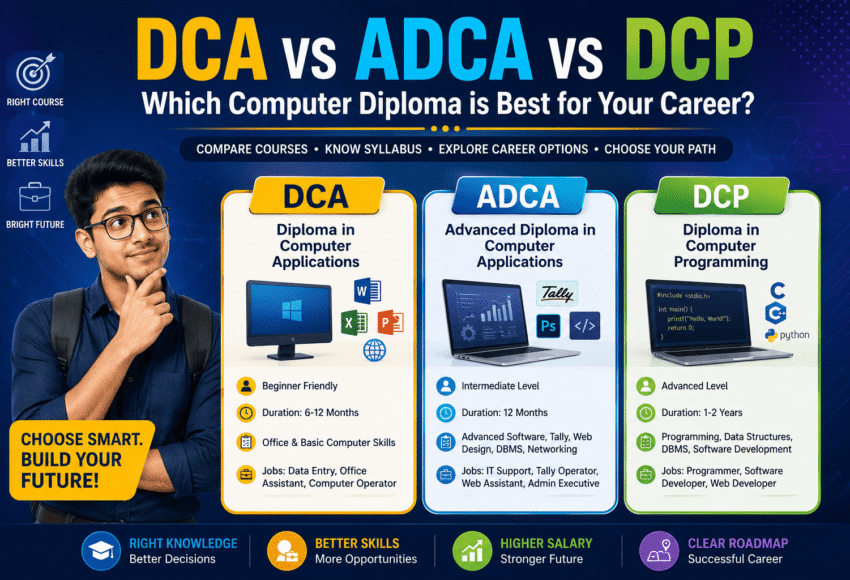
DCA vs ADCA vs DCP: Which Computer Diploma is Best for Your Career in 2026?
Choosing the right computer diploma can shape your career in today’s technology-driven world. Among the most popular options are the DCA (Diploma in Computer Applications), ADCA (Advanced Diploma in Computer Applications), and DCP (Diploma in Computer Programming). While all three courses help students build computer skills, they differ significantly in terms of syllabus, duration, career opportunities, technical depth, and salary potential. This comprehensive guide compares DCA vs ADCA vs DCP to help students, parents, and job seekers choose the best course based on their career goals in 2026. With digital transformation accelerating across every industry, employers increasingly seek candidates with practical computer and technical skills. Whether you want an office job, an IT support role, or a programming career, selecting the right diploma is essential.
Let’s compare these three popular diploma programmes in detail.
What is DCA?
DCA (Diploma in Computer Applications) is a beginner-friendly diploma that teaches fundamental computer skills required for office and administrative work.
Duration
- 6–12 Months
Best For
- Beginners
- Students after Class 10 or 12
- Job seekers
- Office professionals
Key Subjects
- Computer Fundamentals
- MS Office
- Internet Applications
- Tally Basics
- Database Fundamentals
- Basic Programming
- Digital Communication
Career Opportunities
- Computer Operator
- Data Entry Operator
- Office Assistant
- Administrative Executive
- Customer Support Executive
What is ADCA?
ADCA (Advanced Diploma in Computer Applications) is an advanced version of DCA that includes additional software, programming, accounting, database management, and web technologies.
Duration
- 12 Months
Best For
- Students wanting advanced computer knowledge
- Candidates preparing for IT careers
- Professionals seeking skill upgrades
Key Subjects
- Advanced MS Office
- Tally Prime & GST
- HTML & CSS
- Database Management
- Photoshop Basics
- Computer Networking
- Internet Applications
- Programming Fundamentals
Career Opportunities
- Computer Instructor
- Office Administrator
- Web Assistant
- Tally Operator
- IT Support Executive
- Junior Graphic Designer
What is DCP?
DCP (Diploma in Computer Programming) focuses on software development and programming languages rather than office automation.
It is the ideal course for students interested in coding and software engineering.
Duration
- 1–2 Years
Best For
- Future Software Developers
- Programmers
- IT Professionals
- Coding Enthusiasts
Key Subjects
- C Programming
- C++
- Java
- Python
- Data Structures
- SQL
- Database Management
- Software Development
- Programming Logic
- Algorithms
Career Opportunities
- Software Developer
- Junior Programmer
- Python Developer
- Java Developer
- Web Developer
- Application Developer
- Database Programmer
Quick Comparison: DCA vs ADCA vs DCP
| Feature | DCA | ADCA | DCP |
|---|---|---|---|
| Full Form | Diploma in Computer Applications | Advanced Diploma in Computer Applications | Diploma in Computer Programming |
| Duration | 6–12 Months | 12 Months | 1–2 Years |
| Difficulty Level | Beginner | Intermediate | Intermediate to Advanced |
| Programming | Basic | Moderate | Advanced |
| Office Skills | Excellent | Excellent | Limited |
| Coding Skills | Basic | Moderate | Extensive |
| Database Knowledge | Basic | Intermediate | Advanced |
| Best For | Office Jobs | IT Support & Computer Applications | Software Development |
| Job Readiness | High | Very High | High |
| Higher Education Path | ADCA, BCA | BCA, MCA | BCA, Software Engineering |
Course Syllabus Comparison
DCA
- Computer Basics
- MS Office
- Internet
- Excel
- Tally
- Basic Programming
ADCA
- Advanced MS Office
- Advanced Excel
- Tally Prime
- GST
- Photoshop
- HTML
- CSS
- SQL
- Computer Networking
- Internet Technologies
DCP
- C Language
- C++
- Java
- Python
- Database Management
- SQL
- Data Structures
- Software Engineering
- Algorithms
- Project Development
Career Opportunities Comparison
After DCA
- Data Entry Operator
- Office Assistant
- Computer Operator
- Administrative Executive
- Customer Support Executive
Average Salary:
₹1.8 – ₹3.5 LPA
After ADCA
- Computer Teacher
- IT Support Executive
- Office Administrator
- Web Assistant
- Tally Operator
- Junior Designer
Average Salary:
₹2.5 – ₹5.5 LPA
After DCP
- Software Developer
- Programmer
- Python Developer
- Java Developer
- Web Developer
- Database Developer
Average Salary:
₹3.5 – ₹8 LPA (Higher with experience and skills)
Which Course Has the Best Career Scope?
Choose DCA if:
- You are a beginner.
- You want a short-duration course.
- You need quick employment.
- You want office administration jobs.
- You need practical computer knowledge.
Choose ADCA if:
- You want broader computer skills.
- You are interested in IT support.
- You want accounting plus technology skills.
- You plan to pursue advanced IT education.
Choose DCP if:
- You enjoy coding.
- You want to become a software developer.
- You are interested in web development.
- You want higher salary opportunities in IT.
- You plan to build a long-term programming career.
Advantages of Each Course
DCA Benefits
- Short duration
- Affordable fees
- Easy to learn
- Job-oriented
- Strong foundation
ADCA Benefits
- Advanced curriculum
- Better job opportunities
- Industry-relevant software training
- Improved salary prospects
- Covers multiple technologies
DCP Benefits
- Programming expertise
- Software development skills
- High-paying IT careers
- Strong demand in the tech industry
- Excellent long-term career growth
Future Scope in 2026
With businesses embracing automation, cloud computing, artificial intelligence, and digital transformation, all three diplomas remain relevant. However, the career direction varies:
- DCA: Best for office administration, clerical, and support roles.
- ADCA: Ideal for versatile IT support, accounting, and digital operations.
- DCP: Best for software development, programming, and technology-driven careers.
Students who continuously upgrade their skills with certifications in AI, cloud computing, cybersecurity, data analytics, or full-stack development can significantly improve their career prospects.
Frequently Asked Questions (FAQs)
1. Which is better: DCA, ADCA, or DCP?
It depends on your career goal. DCA is suitable for beginners and office jobs; ADCA offers broader IT skills, while DCP is ideal for students aiming for software development and programming careers.
2. Is ADCA better than DCA?
Yes. ADCA builds on DCA concepts by covering advanced software, web technologies, databases, and accounting tools, making it more comprehensive.
3. Can I become a software developer after DCA?
DCA provides only basic programming knowledge. To become a software developer, pursuing DCP or advanced programming courses is recommended.
4. Which course offers the highest salary?
Among the three, DCP generally provides the highest salary potential because programming and software development skills are in greater demand.
5. Is DCP difficult for beginners?
DCP requires logical thinking and an interest in coding. Beginners can succeed with regular practice and dedication.
6. Which diploma is best after Class 12?
Students interested in office administration can choose DCA or ADCA, while those aspiring to enter software development should consider DCP.
Conclusion
Choosing between DCA, ADCA, and DCP depends entirely on your career aspirations.
- DCA is an excellent choice for beginners seeking quick employment in office administration and computer operations.
- ADCA is best for learners who want a broader understanding of computer applications, accounting software, and IT support, offering greater versatility and career opportunities.
- DCP is the ideal pathway for students passionate about programming, software development, and high-growth technology careers.
As the demand for skilled digital professionals continues to rise in 2026, selecting the right diploma—and complementing it with practical experience and continuous learning—can significantly enhance your employability and long-term career success.



Leave a Comment