
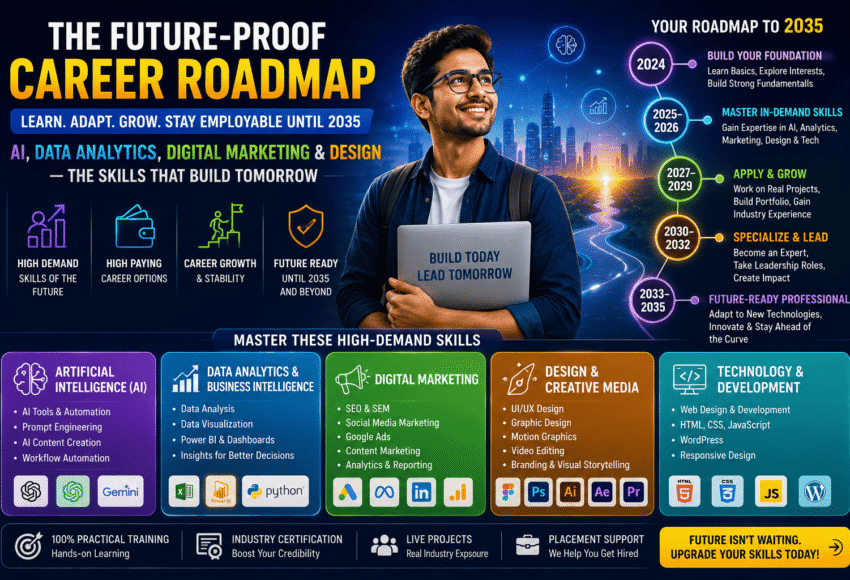
The Future-Proof Career Roadmap: Learn AI, Data Analytics, Digital Marketing & Design to Stay Employable Until 2035
The world of work is changing faster than ever. Artificial Intelligence, automation, digital transformation, cloud technologies, and data-driven business strategies are reshaping every industry. To remain employable through 2035, professionals must build a diverse skill set that combines technology, creativity, analytics, and business knowledge. This guide explores the most valuable career skills, explains why they matter, and outlines a practical roadmap for students, freshers, and working professionals in Ahmedabad who want long-term career success.
The Future-Proof Career Roadmap: Learn AI, Data Analytics, Digital Marketing & Design to Stay Employable Until 2035
Why Future-Proof Skills Matter
Technological innovation is transforming industries at an unprecedented pace. Businesses are adopting AI-powered workflows, cloud platforms, automation, advanced analytics, digital marketing, and user-centered design to improve productivity and customer experiences.
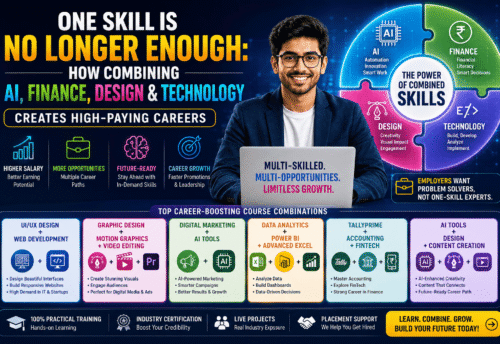
As a result, employers increasingly seek professionals who can learn continuously, work across multiple disciplines, and adapt to emerging technologies. Building a future-ready skill set today can help you stay competitive, expand career opportunities, and prepare for roles that continue to evolve over the next decade.
What Does It Mean to Future-Proof Your Career?
Future-proofing your career means developing practical skills that remain valuable even as technology and industries change.
A future-ready professional typically demonstrates:
- Technical expertise
- Creative problem-solving
- Business understanding
- Digital communication skills
- Data literacy
- AI proficiency
- Adaptability
- Continuous learning
These qualities make professionals more resilient in changing job markets.
The Four Core Skill Areas for Long-Term Employability
1. Artificial Intelligence (AI)
AI has become an essential workplace tool rather than a niche specialization.
Practical AI skills include:
- Prompt Engineering
- AI Content Creation
- AI Image Generation
- AI Video Production
- Research Assistance
- Workflow Automation
- AI Productivity Tools
Professionals who use AI effectively can improve efficiency while enhancing creativity and decision-making.
2. Data Analytics & Business Intelligence
Organizations increasingly rely on data to guide strategy and measure performance.
Core skills include:
- Advanced Excel
- Data Visualization
- Dashboard Creation
- Power BI
- KPI Reporting
- Basic Python Analytics
- Business Intelligence
Professionals who can interpret and communicate data are valuable across industries.
3. Digital Marketing
As businesses compete online, digital marketing continues to be a high-demand career field.
Key learning areas include:
- Search Engine Optimization (SEO)
- Search Engine Marketing (SEM)
- Social Media Marketing
- Google Ads
- Content Marketing
- Email Marketing
- Analytics & Reporting
- Marketing Automation
Combining marketing expertise with AI tools helps improve campaign efficiency and decision-making.
4. Design & User Experience
Strong design skills help businesses communicate effectively and create better customer experiences.
Recommended skills include:
- UI/UX Design
- Graphic Design
- Motion Graphics
- Multimedia Animation
- Video Editing
- Branding
- Visual Storytelling
Design professionals who understand AI and digital marketing can contribute across multiple business functions.
Additional Skills That Strengthen Your Career
To build a well-rounded professional profile, consider learning:
Website Design & Development
- HTML
- CSS
- JavaScript
- WordPress
- Responsive Design
Business & Finance
- TallyPrime
- GST
- Payroll
- Financial Reporting
- FinTech Fundamentals
Workplace Skills
- Communication
- Critical Thinking
- Team Collaboration
- Time Management
- Leadership
- Presentation Skills
- Problem Solving
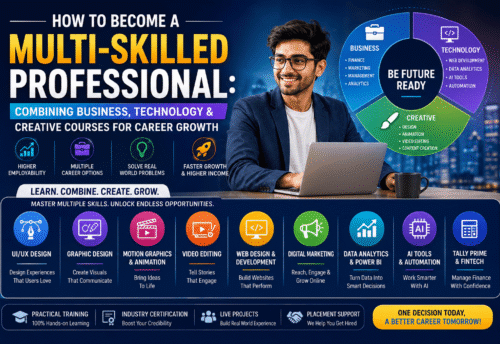
A Practical Career Roadmap for Students and Freshers
Stage 1: Build Strong Digital Foundations
Begin with:
- Computer Fundamentals
- Office Productivity Tools
- Communication Skills
- Internet Research
Stage 2: Learn Creative Skills
Develop expertise in:
- Graphic Design
- UI/UX Design
- Motion Graphics
- Video Editing
Create projects that demonstrate your creativity and technical ability.
Stage 3: Master Technology
Expand into:
- Website Development
- Responsive Design
- WordPress
- Basic Programming Concepts
Stage 4: Learn AI and Analytics
Add future-ready capabilities through:
- AI Productivity Tools
- Prompt Engineering
- Advanced Excel
- Power BI
- Data Analytics
These skills help you make informed decisions and automate repetitive tasks.
Stage 5: Understand Business Growth
Learn how organizations attract customers and increase revenue through:
- Digital Marketing
- SEO
- Social Media Marketing
- Paid Advertising
- Content Strategy
This knowledge complements technical and creative expertise.
Why Employers Value Multi-Skilled Professionals
Businesses increasingly prefer candidates who can:
- Solve practical problems
- Work with AI-enabled tools
- Interpret data
- Design engaging user experiences
- Understand customer needs
- Communicate effectively
- Collaborate across departments
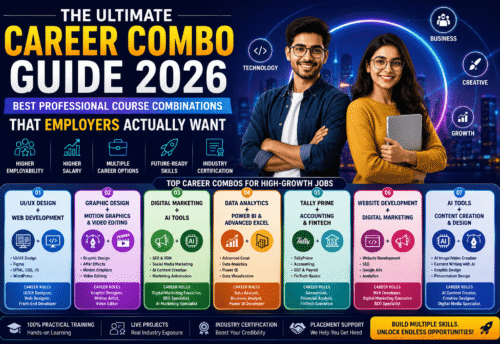
Professionals with diverse skills often qualify for broader responsibilities and long-term career growth.
Ahmedabad: A Growing Hub for Future Careers
Ahmedabad continues to emerge as a center for technology, digital marketing, manufacturing, finance, startups, healthcare, and creative industries.
Local employers increasingly recruit candidates with practical expertise in:
- AI Tools
- Data Analytics
- UI/UX Design
- Graphic Design
- Motion Graphics
- Video Editing
- Website Development
- Digital Marketing
- Power BI
- TallyPrime
- FinTech
Students who combine these skills with live projects, certifications, and portfolios are well positioned for internships and full-time roles.
Build a Portfolio That Demonstrates Your Skills
A strong professional portfolio should include:
- Resume
- Industry Certifications
- Live Projects
- Case Studies
- Portfolio Website
- Software Skills
- Internship Experience
- Freelance Work
- Achievements
- Contact Details
Recruiters increasingly rely on portfolios to evaluate practical capabilities.
Why Practical Training Makes a Difference
An industry-focused learning program helps students:
- Gain hands-on experience
- Work on live industry projects
- Build a professional portfolio
- Learn from experienced mentors
- Earn industry-recognized certifications
- Prepare for interviews
- Develop workplace-ready confidence
- Access placement support
Practical learning bridges the gap between education and employment.
Career Opportunities Through 2035
Professionals with future-ready skills can pursue roles such as:
- AI Content Specialist
- Prompt Engineer
- UI/UX Designer
- Graphic Designer
- Motion Graphics Artist
- Video Editor
- Website Designer
- Front-End Developer
- Digital Marketing Executive
- SEO Specialist
- Data Analyst
- Business Analyst
- Power BI Developer
- Financial Analyst
- FinTech Executive
- Product Designer
- Creative Strategist
- Digital Consultant
- Entrepreneur
- Freelancer
Frequently Asked Questions (FAQs)
What does it mean to future-proof your career?
Future-proofing your career means continuously developing practical skills that remain valuable as technology, industries, and workplace expectations evolve.
Which skills are expected to remain in demand until 2035?
Artificial Intelligence, Data Analytics, Digital Marketing, UI/UX Design, Graphic Design, Website Development, Motion Graphics, Video Editing, Power BI, and FinTech are expected to remain highly relevant across many industries.
Why is AI important for every profession?
AI improves productivity, automates routine tasks, supports content creation, enhances data analysis, and helps professionals make better decisions.
Why should students in Ahmedabad learn multiple skills?
Ahmedabad’s growing digital economy offers opportunities for candidates with practical expertise in technology, design, analytics, AI, finance, and digital marketing.
Is a portfolio more important than a résumé?
A résumé introduces your background, while a portfolio provides evidence of your practical skills, projects, and achievements. Together, they create a stronger impression on employers.
How do professional courses improve employability?
Project-based learning, certifications, live assignments, portfolio development, mentorship, and placement support help learners become job-ready.
Conclusion
The future workplace will reward professionals who embrace continuous learning, combine complementary skills, and adapt to technological change. Building expertise in Artificial Intelligence, Data Analytics, Digital Marketing, UI/UX Design, Graphic Design, Website Development, Motion Graphics, Video Editing, and business fundamentals creates a strong foundation for long-term employability.
For students, graduates, and working professionals in Ahmedabad, investing in practical, industry-oriented training that includes live projects, portfolio development, recognized certifications, and placement support is a strategic step toward career success. By developing future-ready skills today, you can remain competitive, confident, and employable through 2035 and beyond.
Leave a Comment