
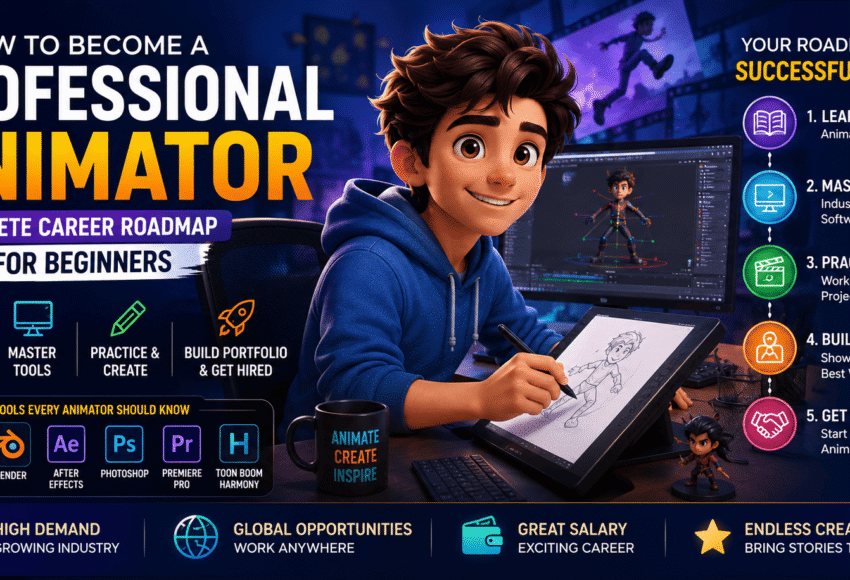
How to Become a Professional Animator: Complete Career Roadmap for Beginners (2026 Guide)
Animation has evolved into one of the fastest-growing creative industries, offering exciting opportunities in films, gaming, advertising, OTT platforms, education, healthcare, and digital media. As businesses increasingly rely on engaging visual content, the demand for skilled animators continues to rise.
If you’re passionate about storytelling, creativity, and digital art, becoming a professional animator can lead to a rewarding career. Whether you’re a student after 12th, a graduate, or someone planning a career switch, this guide will walk you through every step of becoming a successful animator in 2026.
Who is a Professional Animator?
A professional animator creates moving visuals by bringing characters, objects, and environments to life using animation software. Animators combine creativity, storytelling, and technology to produce content for films, television, games, advertisements, websites, mobile apps, and educational platforms.
Their work transforms static designs into engaging visual experiences that entertain, educate, and inspire audiences.
Why Choose Animation as a Career in 2026?
The demand for animation professionals is growing due to:
- OTT and streaming platforms
- Gaming and esports
- Digital advertising
- Social media content
- Virtual production
- E-learning platforms
- AR & VR applications
- AI-assisted content creation
- Medical and scientific visualization
- Architectural walkthroughs
Animation is no longer limited to cartoons—it powers multiple industries worldwide.
Step-by-Step Career Roadmap to Become a Professional Animator
Step 1: Understand the Basics of Animation
Start by learning the core principles of animation, including:
- Timing
- Spacing
- Squash and Stretch
- Anticipation
- Follow Through
- Slow In & Slow Out
- Staging
- Appeal
- Secondary Action
A strong foundation in these principles is essential before working with advanced software.
Step 2: Improve Your Drawing and Observation Skills
While drawing is not mandatory for every animation role, it helps improve:
- Character design
- Storytelling
- Expressions
- Posing
- Composition
- Visual thinking
Practice sketching people, animals, objects, and environments regularly.
Step 3: Learn Industry-Standard Animation Software
Professional animators work with leading software such as:
2D Animation
- Adobe Animate
- Toon Boom Harmony
3D Animation
- Autodesk Maya
- Blender
- Cinema 4D
Supporting Software
- Adobe Photoshop
- Adobe Illustrator
- Adobe After Effects
- Premiere Pro
- ZBrush
Mastering these tools significantly improves employability.
Step 4: Enroll in a Multimedia Animation Course
A professional Multimedia Animation Course provides structured training in:
- 2D Animation
- 3D Animation
- Character Design
- Storyboarding
- Rigging
- Lighting
- Texturing
- Motion Graphics
- VFX Basics
- Video Editing
- AI Tools for Creative Professionals
- Portfolio Development
Hands-on projects and mentorship help accelerate learning.
Step 5: Learn Storytelling
Great animation begins with compelling stories. Develop skills in:
- Character development
- Script understanding
- Scene composition
- Emotional expression
- Camera angles
- Visual communication
Storytelling separates exceptional animators from average ones.
Step 6: Build Practical Projects
Create projects that showcase your abilities, such as:
- Short animated films
- Character animations
- Walk cycles
- Lip-sync animations
- Product animations
- Logo animations
- Motion graphics
- Game character animations
Practical work demonstrates your skills better than certificates alone.
Step 7: Create a Strong Portfolio
Your portfolio is your most valuable asset. Include:
- Best animation projects
- Character designs
- Showreel (1–2 minutes)
- Motion graphics work
- Personal creative projects
- Internship work
- Freelance assignments
A polished portfolio greatly improves your chances of getting hired.
Step 8: Gain Real-World Experience
Look for:
- Internships
- Freelance projects
- Studio collaborations
- Live client assignments
- Personal passion projects
Every project strengthens your experience and confidence.
Step 9: Learn AI Tools for Animation
Modern animation studios increasingly use AI to improve productivity. Useful AI applications include:
- AI-assisted video editing
- Automatic background removal
- Motion capture enhancement
- AI-powered image generation
- Voice synchronization
- Animation workflow automation
Learning AI tools makes you more efficient without replacing your creativity.
Step 10: Apply for Jobs and Continue Learning
Begin applying for roles such as:
- Junior Animator
- 2D Animator
- 3D Animator
- Motion Graphics Designer
- Video Editor
- Character Animator
- Game Animator
Continue learning new software, industry trends, and creative techniques throughout your career.
Essential Skills Every Animator Should Have
Technical Skills:
- 2D Animation
- 3D Animation
- Character Animation
- Storyboarding
- Rigging
- Lighting
- Rendering
- Video Editing
- Motion Graphics
- Basic VFX
Soft Skills:
- Creativity
- Storytelling
- Problem Solving
- Communication
- Teamwork
- Time Management
- Attention to Detail
- Adaptability
Popular Career Opportunities for Animators
After completing your training, you can work as:
- 2D Animator
- 3D Animator
- Character Animator
- Motion Graphics Designer
- VFX Artist
- Storyboard Artist
- Video Editor
- Game Animator
- UI Animation Designer
- Product Visualization Artist
- Architectural Visualization Artist
- Freelance Animator
- AR/VR Content Creator
Average Salary of an Animator in India
| Experience | Average Salary |
|---|---|
| Fresher | ₹3–6 LPA |
| 2–5 Years | ₹6–10 LPA |
| Senior Animator | ₹10–18 LPA |
| Lead Animator | ₹18–30 LPA+ |
| Freelancer | ₹50,000–₹3,00,000+ per month |
Note: Earnings vary based on skills, portfolio, employer, and location.
Industries Hiring Professional Animators
Animation professionals are employed by:
- Animation Studios
- Film Production Houses
- OTT Platforms
- Gaming Companies
- Advertising Agencies
- Digital Marketing Firms
- Television Channels
- E-learning Companies
- Healthcare Visualization Studios
- Architecture Firms
- IT Companies
- Media Agencies
- Startups
- Freelance Marketplaces
Common Mistakes Beginners Should Avoid
- Ignoring animation fundamentals
- Learning too many software tools at once
- Not building a portfolio
- Copying others without developing original work
- Skipping practical projects
- Avoiding feedback and revisions
- Neglecting communication and teamwork skills
Future Scope of Animation in 2026
Animation continues to expand into:
- Gaming
- Virtual Production
- OTT Content
- AI-assisted Creative Workflows
- AR & VR Experiences
- Digital Advertising
- Metaverse Projects
- Medical Animation
- Product Visualization
- Interactive Education
Professionals who combine artistic creativity with technical expertise will remain highly sought after.
Frequently Asked Questions (FAQs)
1. Can I become an animator after 12th?
Yes. Students from Science, Commerce, or Arts streams can pursue a Multimedia Animation Course after completing 12th grade.
2. Do I need to know drawing to become an animator?
No. While drawing is beneficial, many successful animators specialize in 3D animation, rigging, lighting, motion graphics, or VFX without being expert illustrators.
3. Which software should beginners learn first?
Beginners should start with Adobe Photoshop, Adobe After Effects, Blender, or Autodesk Maya, depending on whether they want to focus on 2D or 3D animation.
4. How long does it take to become a professional animator?
With consistent practice and structured training, beginners can develop job-ready skills in approximately 12–24 months, depending on the course and level of dedication.
5. Is animation a good career in India?
Yes. The animation industry is growing steadily due to increased demand in entertainment, gaming, digital marketing, education, and emerging technologies.
6. Can I freelance as an animator?
Absolutely. Many animators successfully work with clients worldwide on projects involving advertising, social media, gaming, explainer videos, and product animations.
Conclusion
Animation is one of the most exciting and future-ready creative careers in 2026. It offers opportunities across films, gaming, advertising, education, healthcare, architecture, and digital media. Becoming a professional animator requires a combination of creativity, technical skills, storytelling, and continuous learning.
By mastering animation fundamentals, learning industry-standard software, building a strong portfolio, working on real-world projects, and embracing AI-powered creative tools, you can establish a successful and rewarding career in the animation industry. With dedication and consistent practice, beginners can transform their passion for creativity into a profession with excellent long-term growth and global opportunities.




Leave a Comment