
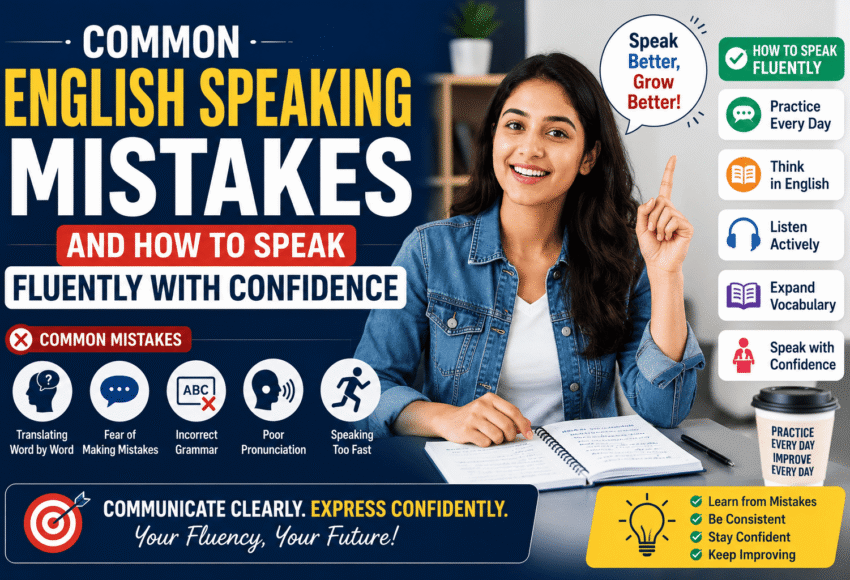
Common English Speaking Mistakes and How to Speak Fluently with Confidence
Speaking English fluently is a valuable skill that opens doors to better education, career opportunities, and global communication. However, many students, job seekers, and working professionals struggle with common English-speaking mistakes that affect their confidence and communication.
The good news is that fluency is not about speaking perfect English—it’s about communicating clearly and confidently. In this comprehensive guide, you’ll learn the most common English speaking mistakes, practical strategies to overcome them, and expert tips to improve your fluency. Whether you’re preparing for interviews, college presentations, public speaking, or workplace communication, these techniques will help you become a more confident English speaker.
Why Learning Fluent English Matters
English is the global language of education, business, technology, travel, and professional communication. Companies across industries prefer candidates who can communicate effectively in English. Strong English speaking skills help you:
- Perform better in job interviews
- Communicate confidently at work
- Build stronger professional relationships
- Improve presentation skills
- Increase career opportunities
- Work in multinational companies (MNCs)
- Develop leadership qualities
- Enhance self-confidence
Fluency is a career skill that benefits students and professionals alike.
Common English Speaking Mistakes
1. Translating from Your Native Language
One of the biggest mistakes learners make is thinking in their native language and translating sentences into English.
Example:
❌ I am having 25 years.
✅ I am 25 years old.
Solution
- Think directly in English.
- Learn complete English phrases instead of translating word by word.
- Practise simple daily conversations.
2. Fear of Making Mistakes
Many learners avoid speaking because they worry about grammar or pronunciation.
This fear leads to:
- Lack of confidence
- Hesitation
- Poor fluency
- Limited vocabulary usage
Solution
Remember:
Communication is more important than perfection.
Practice regularly without worrying about making mistakes.
3. Limited Vocabulary
Using the same basic words repeatedly makes conversations less effective.
Instead of always saying:
- Good
- Nice
- Happy
- Bad
Expand your vocabulary.
For example:
- Excellent
- Outstanding
- Fantastic
- Impressive
- Pleasant
- Confident
- Professional
Learning new words daily improves fluency.
4. Incorrect Pronunciation
Many learners know English words but pronounce them incorrectly.
Examples include:
- Comfortable
- Vegetable
- February
- Entrepreneur
- Develop
Solution
- Listen to native speakers.
- Practice pronunciation daily.
- Record yourself speaking.
- Compare your pronunciation with online resources.
5. Speaking Too Fast
Many learners believe fast speaking means fluent speaking.
Actually:
Fast speaking often causes:
- Grammar mistakes
- Poor pronunciation
- Lack of clarity
Solution
Speak naturally.
Focus on:
- Clear pronunciation
- Correct sentence formation
- Natural pace
Fluent speakers communicate clearly rather than quickly.
6. Using Incorrect Grammar
Grammar mistakes can confuse listeners.
Examples:
❌ She go to school.
✅ She goes to school.
❌ I didn’t went.
✅ I didn’t go.
Solution
Revise basic grammar regularly.
Focus on:
- Tenses
- Subject-verb agreement
- Articles
- Prepositions
7. Poor Listening Skills
Many learners focus only on speaking.
However, listening is equally important.
Listening improves:
- Pronunciation
- Vocabulary
- Sentence structure
- Fluency
Watch English podcasts, interviews, and conversations every day.
8. Memorizing Instead of Understanding
Some learners memorise complete answers for interviews or presentations.
This creates problems when conversations change unexpectedly.
Solution
Understand sentence patterns instead of memorising scripts.
Practise spontaneous speaking.
9. Ignoring Body Language
Communication is more than words.
Professional communication also includes:
- Eye contact
- Facial expressions
- Smile
- Hand gestures
- Confident posture
Positive body language increases confidence.
10. Not Practicing Regularly
Fluency requires consistent practice.
Speaking only once a week slows improvement.
Solution
Practise English for at least 20–30 minutes daily.
Consistency is the key to fluency.
How to Speak English Fluently with Confidence
Practise Speaking Every Day
Speak English whenever possible.
Talk about:
- Your daily routine
- News
- Hobbies
- Career goals
- Current events
Daily speaking develops fluency naturally.
Think in English
Instead of translating from your native language, train yourself to think directly in English.
Start with simple thoughts like:
- I need water.
- I’m going to college.
- Today is a busy day.
Gradually increase sentence complexity.
Read English daily.
Reading improves:
- Vocabulary
- Grammar
- Sentence formation
- Confidence
Read:
- Newspapers
- Blogs
- Articles
- Business magazines
- Books
Watch English Videos
Watch:
- TED-style talks
- Interviews
- Educational videos
- Business presentations
- News channels
Listening improves natural speaking patterns.
Learn Everyday Expressions
Instead of individual words, learn useful phrases like:
- Could you please help me?
- I completely agree.
- That’s a great idea.
- Let me explain.
- I appreciate your support.
- Thank you for your time.
Using phrases makes conversations sound more natural.
Improve Your Pronunciation
Practice:
- Difficult words
- Silent letters
- Stress patterns
- Intonation
Reading aloud daily improves pronunciation significantly.
Record Yourself Speaking
Recording yourself helps identify:
- Grammar mistakes
- Pronunciation issues
- Speaking speed
- Confidence level
Track your progress over time.
Join Group Discussions
Group discussions improve:
- Confidence
- Listening skills
- Vocabulary
- Critical thinking
- Professional communication
They’re especially helpful for students preparing for campus placements.
Practice Public Speaking
Public speaking develops:
- Fluency
- Confidence
- Presentation skills
- Leadership abilities
Start with short presentations and gradually increase your speaking time.
Join a Spoken English & Business Communication Course
Professional guidance helps learners improve faster.
A comprehensive course typically includes:
- Spoken English
- Grammar
- Vocabulary Building
- Pronunciation Practice
- Interview Preparation
- Group Discussions
- Public Speaking
- Business Communication
- Personality Development
- Presentation Skills
Structured learning provides continuous feedback and practical speaking opportunities.
Benefits of Speaking Fluent English
Fluent English helps you:
- Crack job interviews
- Increase confidence
- Improve workplace communication
- Build leadership skills
- Earn better salaries
- Study abroad
- Work with international clients
- Grow professionally
- Expand networking opportunities
- Enhance personality development
Who Should Learn Spoken English?
A Spoken English course is ideal for:
- School students
- College students
- Fresh graduates
- Job seekers
- Working professionals
- Entrepreneurs
- Sales executives
- Customer support professionals
- Business owners
- Anyone looking to improve communication skills
Daily Habits to Improve English Fluency
| Daily Activity | Time Required |
|---|---|
| Read English Articles | 20 Minutes |
| Listen to English podcasts. | 20 Minutes |
| Speak in English | 30 Minutes |
| Learn New Vocabulary | 15 Minutes |
| Practice Pronunciation | 15 Minutes |
| Watch English Videos | 20 Minutes |
| Record Yourself Speaking | 10 Minutes |
Even one hour of focused daily practice can produce remarkable improvements over time.
Frequently Asked Questions (FAQs)
1. What are the most common English-speaking mistakes?
Common mistakes include translating from your native language, incorrect grammar, poor pronunciation, limited vocabulary, speaking too fast, lack of confidence, and inconsistent practice.
2. How can I speak English fluently?
Practise speaking daily, think in English, improve your vocabulary, listen to English conversations, read regularly, work on pronunciation, and join a structured spoken English course.
3. How long does it take to become fluent in English?
The timeline depends on your current level and consistency. With regular practice and proper guidance, many learners experience noticeable improvement within 3–6 months.
4. Is grammar necessary for fluent English?
Yes, but communication is more important than perfection. A solid understanding of basic grammar helps you speak clearly and accurately.
5. Can adults improve their English speaking skills?
Absolutely. With consistent practice, adults can significantly improve their spoken English, confidence, and workplace communication skills at any stage of their career.
6. Does spoken English help in job interviews?
Yes. Good spoken English enables you to introduce yourself confidently, answer interview questions effectively, explain your experience, and leave a positive impression on recruiters.
7. What is included in a Spoken English & Business Communication course?
A quality course generally covers spoken English, grammar, pronunciation, vocabulary, public speaking, business communication, interview preparation, presentation skills, group discussions, and personality development.
Conclusion
Learning to speak English fluently is not about eliminating every mistake—it’s about communicating with clarity, confidence, and purpose. By identifying common speaking mistakes, practising consistently, and focusing on real-life communication, anyone can improve their English speaking skills.
Whether you’re a student preparing for higher education, a job seeker aiming to crack interviews, or a working professional looking for career growth, strong spoken English and business communication skills can transform your personal and professional life. Invest time in daily practice, seek expert guidance, and stay consistent—your confidence and fluency will improve with every conversation.
SEO Keywords Targeted: Common English-speaking mistakes, How to speak English fluently, Spoken English course, English speaking classes, English fluency tips, Business Communication course, Spoken English for students, Spoken English for professionals, Improve English speaking confidence, English interview preparation, Personality development, English-speaking classes in Ahmedabad, communication skills, and a business English course.




Leave a Comment