
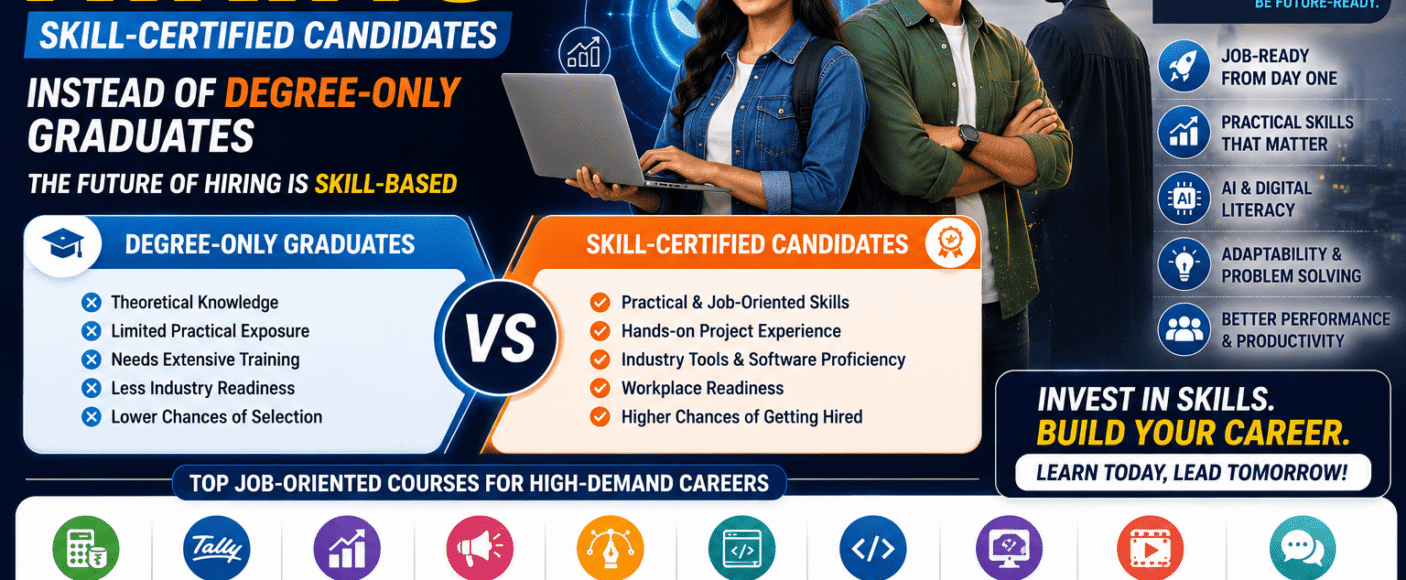
Why Companies Are Hiring Skill-Certified Candidates Instead of Degree-Only Graduates (2026 Career Guide)
The job market has changed significantly over the last decade. While academic degrees continue to provide a strong educational foundation, many employers now seek candidates who can demonstrate practical skills, adapt to new technologies, and contribute from day one.
With the rise of Artificial Intelligence (AI), automation, digital transformation, and data-driven business processes, companies are increasingly looking for professionals who have completed industry-relevant skill development programmes, earned recognised certifications, and built practical experience through projects and internships.
Whether you are a student, graduate, job seeker, or working professional, understanding this shift can help you make better career decisions. This guide explains why skill-certified candidates are becoming more competitive, which skills employers value most, and how professional courses can improve long-term career prospects.
The Changing Hiring Landscape
In the past, employers often relied heavily on academic qualifications. Today, recruitment has become more skills-focused.
Modern businesses evaluate candidates based on:
- Practical knowledge
- Industry software proficiency
- Problem-solving ability
- Communication skills
- Adaptability
- Portfolio or project work
- Continuous learning mindset
- Ability to use AI-powered tools effectively
A degree remains valuable, but many employers also want evidence that candidates can apply their knowledge in real workplace situations.
Degree vs Skill Certification: Understanding the Difference
| Degree | Skill Certification |
|---|---|
| Focuses on academic education | Focuses on practical job skills |
| Usually takes several years | Often completed in weeks or months |
| Covers broad theoretical concepts | Emphasises hands-on learning |
| Foundation for many careers | Supports job readiness and upskilling |
| Valuable for higher education | Useful for industry-specific roles |
Rather than choosing one over the other, many professionals combine academic qualifications with practical certifications to strengthen their employability.
Why Companies Are Prioritising Skills in 2026
1. Technology Is Changing Faster Than Traditional Curricula
Industries are adopting AI, automation, cloud platforms, and advanced analytics at a rapid pace. Professional training programmes can often update their curricula more frequently to reflect current tools and workflows.
2. Employers Need Job-Ready Professionals
Recruiters often prefer candidates who can contribute with minimal additional training.
Practical exposure through:
- Live projects
- Industry software
- Case studies
- Internships
- Portfolio development
can help candidates demonstrate workplace readiness.
3. AI Is Reshaping Every Industry
AI is influencing:
- Finance
- Marketing
- Design
- Healthcare
- Manufacturing
- Education
- Retail
- Logistics
Professionals who understand AI-assisted workflows are increasingly valuable across these sectors.
4. Skills Demonstrate Practical Capability
A recognised certification combined with project work can help showcase:
- Technical competence
- Continuous learning
- Commitment to professional development
- Ability to apply knowledge
Skills Employers Want Most in 2026
Recruiters continue to value a mix of technical and professional capabilities.
Technical Skills
- Artificial Intelligence (AI) Literacy
- Data Analytics
- Advanced Excel
- Power BI
- Digital Marketing
- UI/UX Design
- Graphic Design
- Website Development
- Python Programming
- Tally Prime
- Financial Analysis
- Video Editing
- Motion Graphics
Professional Skills
- Communication
- Teamwork
- Leadership
- Problem Solving
- Critical Thinking
- Adaptability
- Time Management
- Customer Focus
High-Demand Professional Courses
Artificial Intelligence & Generative AI
Learn
- Prompt Engineering
- AI Productivity Tools
- Workflow Automation
- AI Content Creation
Career Opportunities
- AI Content Specialist
- AI Operations Executive
- Automation Support Roles
Data Analytics & Data Visualization
Learn
- Advanced Excel
- Power BI
- Dashboards
- Business Reporting
- Data Cleaning
Career Opportunities
- Data Analyst
- Business Analyst
- MIS Executive
Digital Marketing
Learn
- SEO
- Google Ads
- Social Media Marketing
- Analytics
- AI Marketing Tools
Career Opportunities
- Digital Marketing Executive
- SEO Specialist
- Performance Marketing Executive
Graphic Design
Learn
- Adobe Photoshop
- Illustrator
- Canva
- Branding
- Typography
Career Opportunities
- Graphic Designer
- Brand Designer
- Creative Designer
UI/UX Design
Learn
- Figma
- Wireframing
- Prototyping
- User Research
Career Opportunities
- UI Designer
- UX Designer
- Product Designer
Python Programming
Learn
- Programming Fundamentals
- Automation
- APIs
- Data Processing
Career Opportunities
- Python Developer
- Automation Engineer
Website Design & Development
Learn
- WordPress
- HTML
- CSS
- Responsive Design
- SEO Basics
Career Opportunities
- Website Designer
- Front-End Developer
Tally Prime & Accounting
Learn
- GST
- Payroll
- Inventory
- Financial Statements
Career Opportunities
- Accountant
- Accounts Executive
- GST Executive
Finance & FinTech
Learn
- Financial Reporting
- Banking Operations
- Investment Basics
- Digital Finance
Career Opportunities
- Finance Executive
- Financial Analyst
- FinTech Associate
Multimedia, Motion Graphics & Video Editing
Learn
- Motion Graphics
- Adobe Premiere Pro
- After Effects
- AI Video Tools
Career Opportunities
- Motion Graphics Designer
- Video Editor
- Multimedia Artist
The Value of Industry Certifications
A recognised professional certification can indicate that a learner has completed structured training in a specific domain.
Benefits may include:
- Demonstrated commitment to learning
- Exposure to industry tools
- Improved confidence
- Better portfolio opportunities
- Enhanced interview preparation
The impact of any certification depends on its relevance, quality of training, and the candidate’s ability to apply the skills in practice.
Why Practical Projects Matter
Employers often ask candidates to demonstrate their abilities.
Examples include:
- Marketing campaigns
- Website development projects
- UI/UX case studies
- Graphic design portfolios
- Data dashboards
- Python applications
- Financial reports
- Motion graphics
- Video editing samples
A well-developed portfolio can strengthen a candidate’s profile during recruitment.
Soft Skills Make a Difference
Technical expertise alone is rarely enough.
Companies also value:
- Communication
- Confidence
- Presentation Skills
- Collaboration
- Leadership
- Emotional Intelligence
- Adaptability
- Professional Ethics
These qualities help employees work effectively in dynamic environments.
Building a Strong Employability Profile
A competitive candidate typically combines:
- Academic education
- Professional certification
- Practical projects
- Internship or freelance experience
- Resume optimisation
- Portfolio development
- Interview preparation
- Continuous learning
This balanced approach can improve long-term career readiness.
Why Ahmedabad Is Emerging as a Skill Development Hub
Ahmedabad continues to attract students and professionals because of its:
- Expanding IT ecosystem
- Manufacturing industries
- Financial institutions
- Startup culture
- Digital agencies
- Affordable professional training
- Industry partnerships
- Growing employment opportunities
Common Misconceptions
Myth 1: Degrees Are No Longer Important
Reality: Degrees remain valuable for many careers. However, combining a degree with practical skills and certifications can strengthen employability.
Myth 2: A Certificate Alone Guarantees a Job
Reality: Employers evaluate practical skills, communication, project experience, and interview performance in addition to certifications.
Myth 3: Only Technical Careers Need Skill Certifications
Reality: Finance, marketing, design, communication, customer service, and many other fields also benefit from industry-specific training.
How to Choose the Right Professional Course
Before enrolling, consider:
Updated Curriculum
Ensure the course reflects current industry practices and AI-enabled tools.
Practical Learning
Look for:
- Live Projects
- Case Studies
- Portfolio Development
- Software Training
Experienced Trainers
Industry experience can enhance the learning process.
Career Support
Check for:
- Resume Guidance
- Interview Preparation
- Career Counselling
- Internship Opportunities
- Placement Assistance
FAQs
1. Why are companies hiring skill-certified candidates?
Many employers seek candidates who can demonstrate practical abilities, adapt to changing technologies, and contribute effectively in workplace environments.
2. Are degrees still valuable?
Yes. Degrees provide academic knowledge and remain important for many professions. Combining a degree with industry-relevant skills often creates a stronger profile.
3. Which certifications are most useful in 2026?
Certifications in AI, Data Analytics, Digital Marketing, UI/UX Design, Graphic Design, Python Programming, Finance, Tally Prime, Advanced Excel, and FinTech align with current industry trends.
4. Can professional courses improve employability?
Professional courses that include practical projects, updated tools, and career guidance can help learners develop job-relevant skills.
5. Do employers prefer experience over certificates?
Many employers evaluate both. Practical experience, project work, communication, and relevant certifications together can strengthen a candidate’s application.
6. Which industries value skill-based hiring?
Technology, finance, marketing, healthcare, manufacturing, retail, education, media, and startups increasingly value practical skills alongside academic qualifications.
7. Is Ahmedabad a good place for professional skill development?
Yes. Ahmedabad offers a growing ecosystem of businesses, startups, and training providers across multiple professional domains.
8. How can I become more employable?
Focus on developing practical skills, completing projects, improving communication, earning relevant certifications, and continuously updating your knowledge.
Conclusion
The future of hiring is becoming increasingly skills-oriented. While academic degrees continue to play an important role, employers also want professionals who can solve problems, use modern tools, communicate effectively, and adapt to rapidly changing workplace demands.
Courses in Artificial Intelligence, Data Analytics, Digital Marketing, Graphic Design, UI/UX Design, Python Programming, Website Development, Tally Prime, Finance, FinTech, Multimedia Animation, Motion Graphics, Video Editing, Advanced Excel, and Spoken English can help learners develop practical capabilities that complement their academic education.
The most successful professionals in 2026 will not rely solely on degrees or certificates. They will combine formal education with hands-on training, real-world projects, industry-relevant certifications, strong communication skills, and a commitment to lifelong learning. This balanced approach positions candidates to compete effectively in a dynamic and technology-driven job market.

Leave a Comment