
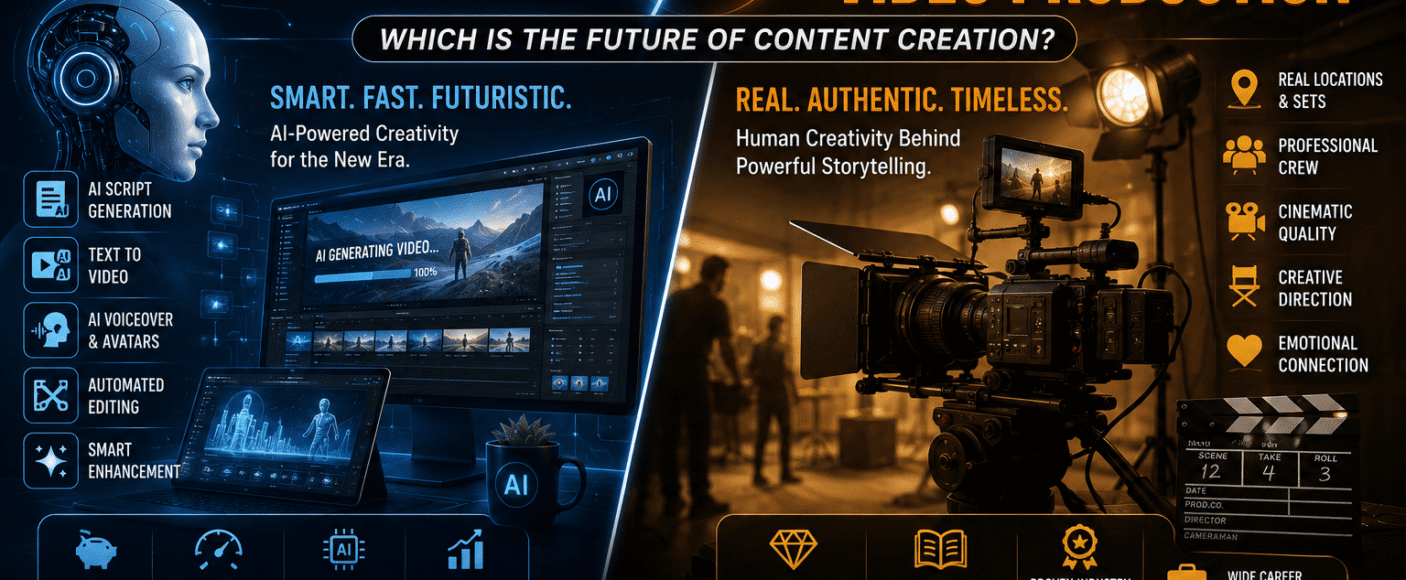
AI Filmmaking vs Traditional Video Production: Which is the Future of Content Creation?
Artificial Intelligence is transforming the film and video industry faster than ever before. From AI-generated scripts and virtual actors to automated editing and text-to-video generation, AI filmmaking is changing how creators produce content. At the same time, traditional video production continues to deliver unmatched authenticity, cinematic storytelling, and creative direction.
So, is AI replacing traditional filmmaking? Or will the future belong to professionals who combine AI tools with real-world production skills?
This comprehensive guide compares AI Filmmaking vs Traditional Video Production based on workflow, creativity, cost, production speed, software, career opportunities, salary potential, and future industry demand to help aspiring creators, students, and professionals choose the right path.
What is AI Filmmaking?
AI Filmmaking uses artificial intelligence to assist or automate different stages of video production. Instead of relying solely on cameras, large crews, and physical locations, creators can use AI-powered tools to generate visuals, edit footage, enhance audio, create voiceovers, produce subtitles, and even generate entire video scenes from text prompts.
AI filmmaking can assist with:
- Script Writing
- Storyboarding
- Text-to-Video Generation
- AI Voiceovers
- AI Avatars
- Automatic Video Editing
- Background Removal
- Color Enhancement
- Sound Cleanup
- Subtitle Generation
- Visual Effects Assistance
- Content Repurposing
AI accelerates production while reducing repetitive manual tasks.
What is Traditional Video Production?
Traditional Video Production is the conventional process of planning, filming, editing, and delivering professional video content using cameras, lighting, audio equipment, actors, directors, editors, and production teams.
Traditional production typically includes:
- Pre-Production Planning
- Script Development
- Casting
- Location Scouting
- Camera Operation
- Lighting Setup
- Sound Recording
- Directing
- Editing
- Color Grading
- Sound Design
- Final Delivery
It remains the preferred approach for projects requiring cinematic quality and authentic performances.
AI Filmmaking vs Traditional Video Production: Quick Comparison
| Feature | AI Filmmaking | Traditional Video Production |
|---|---|---|
| Production Speed | Very Fast | Moderate |
| Equipment Cost | Lower | Higher |
| Human Crew | Minimal | Large Team |
| Creativity | AI-Assisted | Human-Led |
| Realism | Improving Rapidly | Excellent |
| Flexibility | High | High |
| Learning Curve | Moderate | Moderate to Advanced |
| Best For | Marketing, Social Media, Explainers | Films, Commercials, Events, Documentaries |
| Scalability | Excellent | Moderate |
Skills Required for AI Filmmaking
Professionals working with AI filmmaking should develop skills in:
- Prompt Engineering
- Storytelling
- Creative Direction
- AI Content Generation
- Video Editing
- Motion Graphics
- Script Writing
- AI Workflow Management
- Visual Composition
- Audio Enhancement
- Brand Communication
- Ethical AI Usage
Understanding traditional filmmaking principles remains valuable when using AI creatively.
Skills Required for Traditional Video Production
Traditional production emphasizes:
- Cinematography
- Camera Operation
- Lighting Techniques
- Audio Recording
- Script Development
- Directing
- Editing
- Color Grading
- Team Collaboration
- Production Planning
- Shot Composition
- Storytelling
These foundational skills remain essential across the film and media industry.
Popular AI Filmmaking Tools
Modern AI creators often use:
- Runway
- Pika
- Luma AI
- Adobe Firefly
- Kling AI
- Veo
- Descript
- ElevenLabs
- Midjourney (for concept art)
- ChatGPT (for scripting and ideation)
These tools streamline ideation, asset creation, editing, and post-production.
Popular Traditional Video Production Software
Industry-standard software includes:
- Adobe Premiere Pro
- DaVinci Resolve
- Final Cut Pro
- Adobe After Effects
- Adobe Audition
- Cinema 4D
- Blender
- Autodesk Maya
- Avid Media Composer
These tools support professional editing, VFX, animation, audio, and finishing workflows.
Career Opportunities in AI Filmmaking
As AI adoption grows, new roles are emerging, including:
- AI Content Creator
- AI Filmmaker
- Creative AI Specialist
- AI Video Producer
- Prompt Designer
- AI Motion Designer
- Digital Marketing Video Creator
- Virtual Production Artist
- AI Advertising Creator
- AI Storytelling Consultant
Industries hiring AI-focused creators include:
- Digital Marketing Agencies
- Advertising Firms
- EdTech Platforms
- Startups
- Social Media Agencies
- E-commerce Companies
- Content Studios
- Corporate Communications
Career Opportunities in Traditional Video Production
Professionals can pursue roles such as:
- Video Editor
- Cinematographer
- Director
- Camera Operator
- Producer
- Colorist
- Sound Designer
- Lighting Technician
- Documentary Filmmaker
- Commercial Video Producer
Industries include:
- Film Production Houses
- OTT Platforms
- Television
- News Media
- Advertising Agencies
- Event Production
- Corporate Media Teams
- Independent Studios
Salary Comparison
Compensation varies by skills, portfolio, experience, and project type.
AI Filmmaking Professionals
Freshers:
- ₹4–8 LPA
Experienced Professionals:
- ₹8–18+ LPA
Specialists who combine AI expertise with storytelling and production experience are increasingly sought after.
Traditional Video Production Professionals
Freshers:
- ₹3–6 LPA
Experienced Professionals:
- ₹7–15+ LPA
Highly experienced directors, cinematographers, editors, and producers working on large-scale productions can earn significantly more.
Future Scope of AI Filmmaking
AI filmmaking is expected to grow because of:
- Faster Content Production
- Personalized Marketing Videos
- Text-to-Video Technology
- Virtual Influencers
- Automated Editing
- AI-Assisted Visual Effects
- Lower Production Costs
- Increased Demand for Digital Content
AI is becoming an integral part of creative workflows rather than a replacement for creative professionals.
Future Scope of Traditional Video Production
Traditional production remains strong due to:
- Feature Films
- Television
- Commercial Advertising
- Documentary Production
- Live Events
- Wedding Cinematography
- Corporate Brand Films
- High-End Streaming Content
Human creativity, directing, and real-world storytelling continue to be essential for premium productions.
AI Filmmaking vs Traditional Video Production: Which Should You Choose?
Choose AI Filmmaking if you enjoy:
- Exploring new technologies
- Creating content quickly
- AI-powered creativity
- Digital marketing
- Social media production
- Automation
- Experimenting with new workflows
Choose Traditional Video Production if you enjoy:
- Cinematography
- Directing actors
- Real-world filming
- Camera techniques
- Lighting
- Film production
- Long-form storytelling
- Team collaboration
Can You Combine Both?
Absolutely.
The future of filmmaking lies in hybrid production workflows. Many professionals now use AI for scripting, pre-visualization, voiceovers, editing assistance, and post-production while relying on traditional filming techniques for capturing authentic performances and cinematic visuals.
Learning both AI tools and traditional production methods can make you more adaptable and competitive in the evolving media industry.
Why Choose a Professional Training Institute?
A comprehensive filmmaking program should provide:
- Industry-Relevant Curriculum
- Hands-On Production Projects
- AI Video Creation Training
- Professional Editing Software
- Cinematography Workshops
- Portfolio Development
- Internship Opportunities
- Placement Support
- Experienced Mentors
- Exposure to Emerging Technologies
Practical experience combined with AI literacy prepares students for modern creative careers.
Frequently Asked Questions (FAQs)
1. Is AI replacing traditional filmmaking?
No. AI is transforming workflows by automating repetitive tasks and accelerating production, but human creativity, storytelling, directing, and artistic judgment remain essential.
2. Which is better: AI Filmmaking or Traditional Video Production?
Both have advantages. AI filmmaking excels in speed and scalability, while traditional production delivers greater authenticity, cinematic quality, and emotional depth.
3. Can beginners learn AI filmmaking?
Yes. Many AI tools are designed for beginners, making it easier to create videos with limited technical experience. However, understanding filmmaking fundamentals remains valuable.
4. Do I still need to learn video editing if I use AI?
Yes. Editing knowledge helps refine AI-generated content, improve storytelling, and achieve professional-quality results.
5. Which software should I learn first?
For traditional editing, Adobe Premiere Pro or DaVinci Resolve are excellent starting points. For AI-assisted workflows, learning tools such as Runway, Pika, or Luma AI can complement your skills.
6. Is AI filmmaking suitable for digital marketing?
Yes. AI can significantly speed up the creation of promotional videos, product demos, social media content, and personalized advertising campaigns.
7. What careers are emerging because of AI filmmaking?
New opportunities include AI Content Creator, AI Video Producer, Prompt Designer, Virtual Production Artist, and Creative AI Specialist.
8. Is traditional video production still in demand?
Yes. Films, commercials, documentaries, live events, and premium streaming content continue to rely heavily on traditional production techniques.
9. Can I learn AI filmmaking and traditional production together?
Yes. Combining both skill sets allows you to produce higher-quality content while benefiting from AI-driven efficiency.
10. Which option has better career growth in 2026?
Professionals who understand both AI tools and traditional filmmaking principles are likely to have the strongest long-term career opportunities as the industry increasingly adopts hybrid production models.
Conclusion
The future of content creation is not about choosing between AI Filmmaking and Traditional Video Production—it’s about understanding how they complement each other. AI offers speed, automation, and scalability, making it ideal for marketing, social media, and rapid content production. Traditional filmmaking continues to deliver authentic performances, cinematic storytelling, and high production value for films, documentaries, commercials, and premium video projects.
For aspiring creators, the most future-ready path is to master traditional production fundamentals while embracing AI-powered tools to enhance creativity and productivity. This balanced approach positions professionals to succeed in a rapidly evolving media landscape.



Leave a Comment