
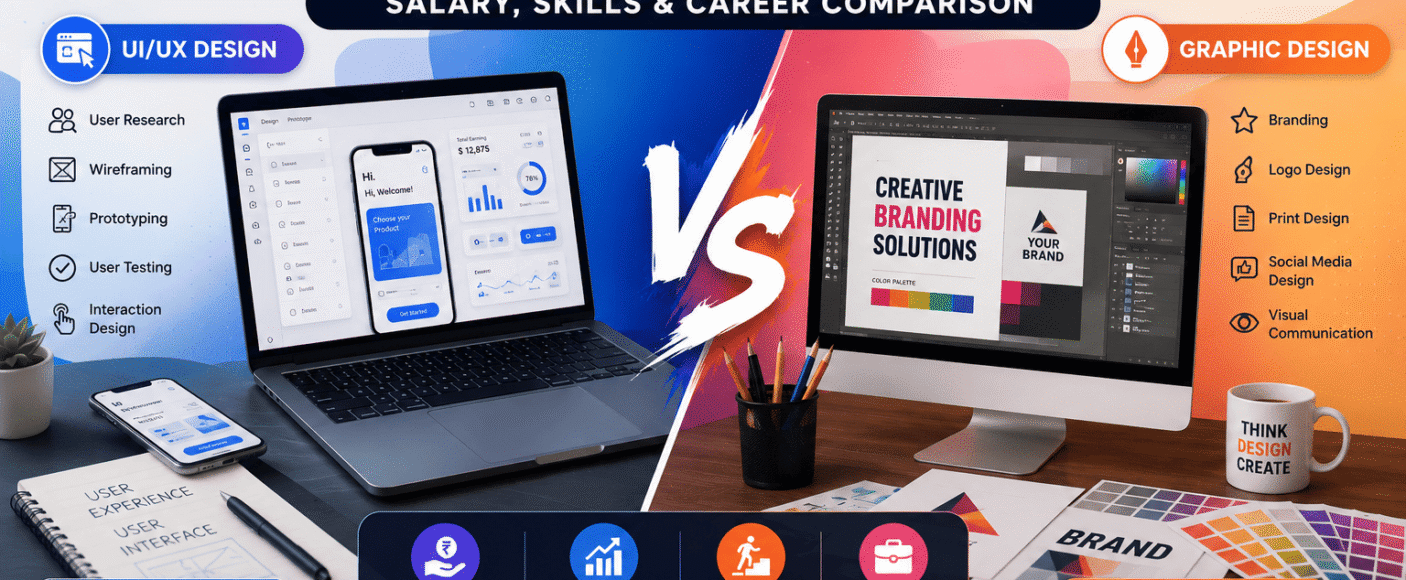
UI/UX Design vs Graphic Design: Salary, Skills & Career Comparison (2026 Guide)
If you’re planning a career in the creative industry, you’ve likely come across two popular options: UI/UX Design and Graphic Design. While both involve creativity and visual communication, their goals, tools, workflows, and career opportunities differ significantly.
Graphic Design focuses on creating visually appealing content for branding, advertising, and marketing, whereas UI/UX Design is centered on designing user-friendly digital experiences for websites, mobile apps, and software products.
This comprehensive guide compares UI/UX Design vs Graphic Design based on salary, skills, software, job roles, career growth, future demand, and course suitability to help you choose the right path.
What is UI/UX Design?
UI (User Interface) Design focuses on the visual elements users interact with, such as buttons, layouts, icons, typography, and colors. UX (User Experience) Design ensures that digital products are intuitive, easy to use, and solve user problems effectively.
UI/UX designers work on:
- Mobile Applications
- Websites
- SaaS Platforms
- E-commerce Stores
- Web Applications
- Dashboards
- FinTech Products
- Healthcare Applications
- Educational Platforms
Their objective is to improve usability, accessibility, and customer satisfaction.
What is Graphic Design?
Graphic Design is the art of communicating ideas visually using typography, images, colors, and layouts. Graphic designers create static visual content for both print and digital platforms.
Common Graphic Design projects include:
- Logo Design
- Brand Identity
- Social Media Creatives
- Brochures
- Flyers
- Packaging Design
- Business Cards
- Posters
- Advertisements
- Magazine Layouts
- Marketing Materials
Graphic designers help businesses build a strong visual identity.
UI/UX Design vs Graphic Design: Quick Comparison
| Feature | UI/UX Design | Graphic Design |
|---|---|---|
| Main Focus | User Experience & Digital Interfaces | Visual Communication & Branding |
| Work Type | Interactive Design | Static Visual Design |
| Creativity | High | Very High |
| Research Required | Extensive | Limited |
| Coding Knowledge | Basic understanding is beneficial | Not required |
| Software | Figma, Adobe XD, Sketch | Photoshop, Illustrator, InDesign, CorelDRAW |
| Industries | IT, Startups, SaaS, FinTech | Advertising, Marketing, Media, Printing |
| Freelancing | Excellent | Excellent |
| Remote Jobs | High | High |
| Demand | Very High | Very High |
Skills Required for UI/UX Design
A UI/UX Design course teaches students to create user-centered digital products through research, design, and testing.
Key skills include:
- User Research
- Wireframing
- Prototyping
- Information Architecture
- User Flow Design
- Responsive Design
- Interaction Design
- Design Thinking
- Usability Testing
- Accessibility Standards
- Design Systems
- Problem Solving
- Collaboration with Developers
Skills Required for Graphic Design
Graphic Design focuses on creating attractive visual assets for branding and communication.
Students typically learn:
- Typography
- Color Theory
- Layout Design
- Logo Design
- Brand Identity
- Packaging Design
- Print Design
- Social Media Graphics
- Visual Storytelling
- Image Editing
- Marketing Design
- Creative Composition
Software Used in UI/UX Design
Professional UI/UX designers commonly use:
- Figma
- Adobe XD
- Sketch
- Adobe Photoshop
- Adobe Illustrator
- FigJam
- Miro
- Zeplin
- InVision
- Principle
Many teams also use AI-powered design assistants to speed up wireframing, prototyping, and design iteration.
Software Used in Graphic Design
Graphic Designers often work with:
- Adobe Photoshop
- Adobe Illustrator
- Adobe InDesign
- CorelDRAW
- Canva
- Adobe Express
- Figma (for digital design)
- Affinity Designer
These tools are widely used for branding, advertising, publishing, and marketing.
Career Opportunities in UI/UX Design
UI/UX professionals can pursue roles such as:
- UI Designer
- UX Designer
- Product Designer
- Interaction Designer
- UX Researcher
- Information Architect
- Visual Designer
- Mobile App Designer
- Web Designer
- Design System Specialist
Industries hiring UI/UX designers include:
- IT Companies
- Software Development Firms
- SaaS Companies
- FinTech
- Healthcare Technology
- EdTech
- E-commerce
- Startups
- Product-Based Companies
Career Opportunities in Graphic Design
Graphic Design graduates can work as:
- Graphic Designer
- Brand Designer
- Visual Designer
- Packaging Designer
- Marketing Designer
- Creative Designer
- Print Designer
- Advertising Designer
- Social Media Designer
- Digital Content Designer
Industries include:
- Advertising Agencies
- Branding Firms
- Digital Marketing Agencies
- Printing Companies
- Media Houses
- Publishing Companies
- Retail Businesses
- Corporate Organizations
Salary Comparison
Salary varies based on experience, portfolio, location, specialization, and company.
UI/UX Designer Salary
Freshers:
- ₹4–8 LPA
Experienced Professionals:
- ₹8–18+ LPA
Senior Product Designers and UX Specialists in leading product companies can earn significantly higher packages.
Graphic Designer Salary
Freshers:
- ₹2.5–5 LPA
Experienced Professionals:
- ₹6–12+ LPA
Experienced designers specializing in branding, packaging, or digital marketing can command higher salaries and freelance rates.
Future Scope of UI/UX Design
Demand for UI/UX designers is increasing due to:
- Mobile App Development
- Digital Transformation
- SaaS Growth
- AI-Powered Applications
- E-commerce Expansion
- FinTech Innovation
- Smart Devices
- UX-Driven Product Development
Businesses increasingly recognize user experience as a competitive advantage.
Future Scope of Graphic Design
Graphic Design remains essential because businesses continually need visual communication for:
- Branding
- Social Media Marketing
- Advertising Campaigns
- Content Marketing
- Packaging
- E-commerce
- Corporate Communication
- Digital Publishing
The rise of AI design tools is changing workflows but continues to create demand for creative professionals who can think strategically and build strong visual identities.
UI/UX Design vs Graphic Design: Which Should You Choose?
Choose UI/UX Design if you enjoy:
- Solving user problems
- Research and analysis
- Website and app design
- Technology
- Logical thinking
- Interactive experiences
- Product development
Choose Graphic Design if you enjoy:
- Branding
- Typography
- Creative artwork
- Marketing campaigns
- Visual storytelling
- Advertising
- Print and digital media
Can You Learn Both?
Absolutely.
Many professionals begin with Graphic Design and later transition into UI/UX Design. A strong foundation in visual design can make it easier to create polished digital interfaces, while UI/UX knowledge expands career opportunities into product design and technology.
Why Enroll in a Professional Design Institute?
A quality training institute provides:
- Industry-Relevant Curriculum
- Experienced Mentors
- Practical Projects
- Portfolio Development
- Latest Software Training
- AI-Integrated Design Workflows
- Internship Support
- Placement Assistance
- Soft Skills Development
- Career Guidance
Hands-on learning and a professional portfolio are often key factors in securing design roles.
Frequently Asked Questions (FAQs)
1. Which is better: UI/UX Design or Graphic Design?
Both are excellent career options. UI/UX Design is ideal for those interested in digital products and user experiences, while Graphic Design is best for branding, advertising, and visual communication.
2. Does UI/UX Design pay more than Graphic Design?
In many cases, UI/UX roles offer higher average salaries due to the growing demand for digital product designers. However, experienced Graphic Designers with specialized expertise can also achieve high earnings.
3. Can a Graphic Designer become a UI/UX Designer?
Yes. Many UI/UX professionals start with Graphic Design and build additional skills in user research, wireframing, prototyping, and usability testing.
4. Is coding required for UI/UX Design?
Coding is not mandatory, but having a basic understanding of HTML, CSS, and front-end development can improve collaboration with developers.
5. Which software should beginners learn first?
For UI/UX Design, Figma is an excellent starting point. For Graphic Design, Adobe Photoshop and Adobe Illustrator are widely used industry standards.
6. Which field has better freelancing opportunities?
Both offer strong freelancing potential. UI/UX designers often work on websites and apps, while Graphic Designers create branding, marketing materials, and social media content.
7. Can I pursue these courses after the 12th?
Yes. Both UI/UX Design and Graphic Design courses are suitable after completing the 12th standard, depending on your interests and career goals.
8. Is UI/UX Design in demand in India?
Yes. Startups, IT companies, SaaS businesses, fintech firms, and product-based organizations continue to seek skilled UI/UX designers as digital adoption grows.
9. Is Graphic Design still a good career despite AI?
Yes. AI can assist with repetitive tasks, but businesses still rely on designers for creative strategy, branding, originality, and solving real communication challenges.
10. Can I learn UI/UX Design and Graphic Design together?
Yes. Combining both skill sets can make you a more versatile designer, opening opportunities in branding, product design, digital marketing, and user experience.
Conclusion
Choosing between UI/UX Design and Graphic Design depends on your interests, career aspirations, and preferred way of working. If you’re passionate about designing seamless digital experiences, improving usability, and building websites or apps, UI/UX Design offers excellent growth and earning potential. If your strengths lie in creativity, branding, typography, and visual storytelling, Graphic Design provides diverse opportunities across marketing, media, and advertising.
Both careers are in high demand, and learning the latest design tools, AI-assisted workflows, and building a strong portfolio will significantly improve your job prospects. With the right training and practical experience, either path can lead to a rewarding and future-ready career.

Leave a Comment