
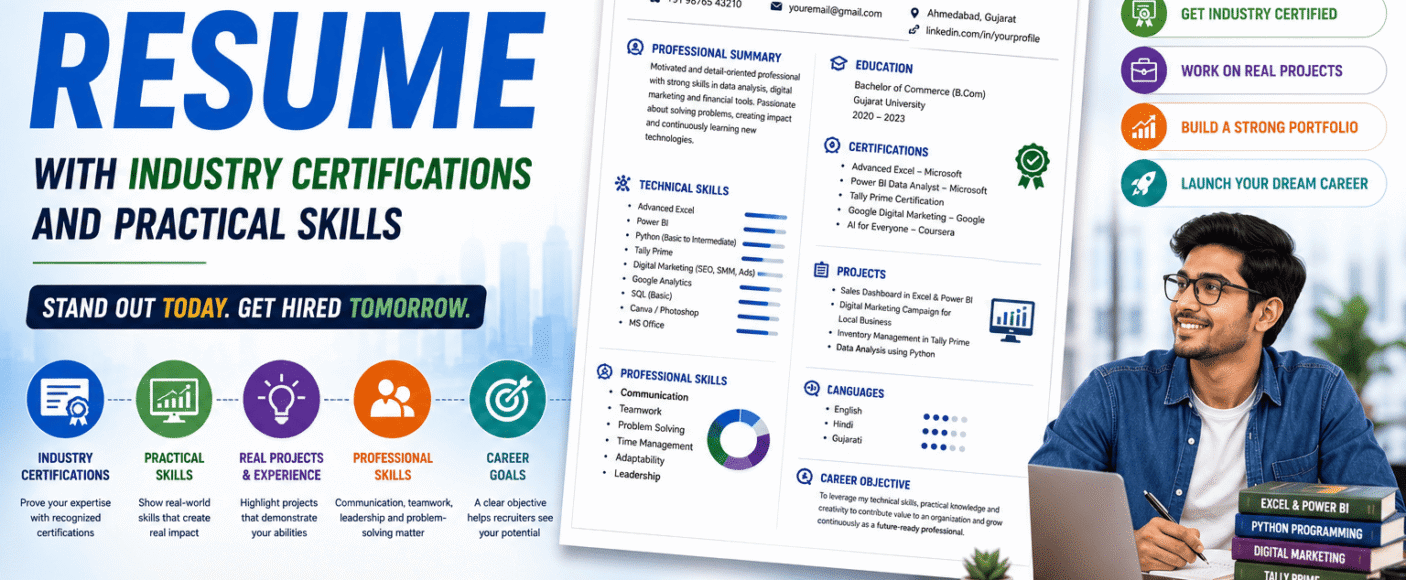
How to Build a Future-Ready Resume with Industry Certifications and Practical Skills (2026 Career Guide)
A resume is no longer just a document listing your education and work experience—it is your personal marketing tool. In 2026, recruiters expect resumes to showcase practical skills, industry certifications, AI literacy, project experience, and measurable achievements. Candidates who can demonstrate real-world expertise often stand out in competitive hiring processes.
Whether you are a student, fresher, graduate, or working professional, building a future-ready resume requires a strategic combination of technical knowledge, professional skills, certifications, internships, and hands-on projects.
This guide explains how to create a resume that reflects your capabilities and aligns with the expectations of modern employers across industries such as Finance, Data Analytics, Digital Marketing, UI/UX Design, Graphic Design, Website Development, Python Programming, Motion Graphics, Video Editing, Artificial Intelligence, and Business Communication.
Why Resume Expectations Have Changed
Recruitment has evolved significantly over the past decade.
Employers increasingly look for candidates who can:
- Demonstrate practical experience
- Solve business problems
- Work with digital tools
- Adapt to AI-enabled workflows
- Communicate effectively
- Collaborate with teams
- Continue learning throughout their careers
A resume should present evidence of these abilities rather than simply listing qualifications.
What Makes a Resume Future-Ready?
A future-ready resume highlights both technical and professional competencies.
Key elements include:
- Relevant education
- Industry certifications
- Technical skills
- Practical projects
- Internship or work experience
- AI literacy
- Professional skills
- Portfolio links (where applicable)
- Quantifiable achievements
Together, these elements provide a more complete picture of your capabilities.
Step 1: Write a Strong Professional Summary
Start your resume with a concise summary that reflects your career goals and key strengths.
Example:
“Motivated graduate with practical experience in Advanced Excel, Data Analytics, Python, and AI productivity tools. Skilled in analyzing business data, creating dashboards, and collaborating on real-world projects. Committed to continuous learning and professional growth.”
Tailor this section to the role you are applying for.
Step 2: Showcase Relevant Technical Skills
Recruiters often review technical skills early in the hiring process.
Choose skills that match your target role.
Finance & Accounting
- Tally Prime
- GST
- Payroll
- Advanced Excel
- Financial Reporting
- FinTech Basics
Data Analytics
- Advanced Excel
- Power BI
- Data Visualization
- Python
- SQL (if applicable)
- AI Tools
Digital Marketing
- SEO
- Google Ads
- Social Media Marketing
- Analytics
- Content Marketing
- AI Marketing Tools
UI/UX Design
- Figma
- Wireframing
- Prototyping
- User Research
- Design Systems
Graphic Design
- Adobe Photoshop
- Illustrator
- Canva
- Branding
- AI Design Tools
Website Development
- HTML
- CSS
- WordPress
- Responsive Design
- Basic SEO
Programming
- Python
- C
- C++
- APIs
- Automation
Motion Graphics & Video Editing
- After Effects
- Premiere Pro
- Motion Graphics
- Storytelling
- AI Video Tools
Step 3: Highlight Industry Certifications
Relevant certifications demonstrate ongoing learning and familiarity with industry-standard tools.
Examples include certifications in:
- Artificial Intelligence
- Data Analytics
- Advanced Excel
- Power BI
- Tally Prime
- Digital Marketing
- Graphic Design
- UI/UX Design
- Website Development
- Python Programming
- Motion Graphics
- Business Communication
List certifications with:
- Certification name
- Issuing organization
- Completion year
Include only certifications relevant to your career goals.
Step 4: Include Practical Projects
Projects often help recruiters understand how you apply your knowledge.
Examples:
Data Analytics
- Sales Dashboard
- HR Analytics Dashboard
- Business Performance Report
Finance
- GST Report
- Payroll System
- Financial Statement Analysis
Digital Marketing
- SEO Campaign
- Social Media Strategy
- Google Ads Project
Graphic Design
- Brand Identity Package
- Logo Collection
- Marketing Creatives
Website Development
- Business Website
- Portfolio Website
- E-commerce Landing Page
Python
- Expense Tracker
- Automation Script
- Data Cleaning Project
Motion Graphics
- Product Explainer Video
- Animated Social Media Ad
- Corporate Intro
Projects provide concrete examples that you can discuss during interviews.
Step 5: Demonstrate AI Literacy
AI is becoming part of many professional workflows.
Mention relevant experience with:
- AI productivity tools
- Prompt writing
- AI-assisted research
- Workflow automation
- Responsible AI usage
Describe how AI supported your work rather than implying it completed the work independently.
Step 6: Highlight Professional Skills
Technical knowledge should be balanced with workplace competencies.
Include skills such as:
- Communication
- Spoken English
- Business Communication
- Teamwork
- Problem Solving
- Critical Thinking
- Leadership
- Adaptability
- Time Management
These abilities are often evaluated during interviews.
Step 7: Quantify Achievements
Whenever possible, replace generic statements with measurable outcomes.
Instead of:
“Worked on marketing projects.”
Consider:
“Contributed to a digital marketing campaign by preparing SEO-friendly content and analyzing website performance using analytics tools.”
Ensure all achievements accurately reflect your work.
Step 8: Optimize Your Resume for ATS
Many employers use Applicant Tracking Systems (ATS) to organize applications.
Tips:
- Match relevant keywords from the job description.
- Use standard section headings.
- Avoid excessive graphics or complex formatting.
- Include relevant certifications and technical skills.
- Keep formatting clean and readable.
ATS performance depends on multiple factors, so focus on accuracy and relevance.
Step 9: Build an Online Portfolio
For technical and creative careers, include links to:
- Personal portfolio
- GitHub repositories
- Behance
- Dribbble
- Professional website
A portfolio demonstrates practical work beyond the resume.
Step 10: Keep Updating Your Resume
Your resume should evolve as your skills and experience grow.
Regularly update:
- Certifications
- Projects
- Technical skills
- AI knowledge
- Work experience
- Achievements
Continuous improvement reflects professional growth.
Resume Checklist
✔ Professional Summary
✔ Technical Skills
✔ Industry Certifications
✔ Practical Projects
✔ Internship Experience
✔ AI Skills
✔ Professional Skills
✔ Portfolio Links
✔ Quantifiable Achievements
✔ Updated Contact Information
Common Resume Mistakes
Listing Every Course
Focus on certifications relevant to the role.
No Practical Experience
Projects, internships, and volunteer work help demonstrate applied knowledge.
Ignoring Professional Skills
Communication and teamwork remain essential across industries.
Generic Resume for Every Job
Customize your resume for each application.
Outdated Skills
Continue learning and updating your profile to reflect current technologies.
Why Practical Skills Matter More Than Ever
Employers increasingly value candidates who can demonstrate:
- Real-world problem solving
- Hands-on software experience
- Project execution
- Collaboration
- Adaptability
- Continuous learning
Practical skills complement formal education and certifications.
Why Ahmedabad Is a Great Place to Build Career Skills
Ahmedabad continues to grow as a center for:
- Information Technology
- Financial Services
- Digital Marketing
- Manufacturing
- Creative Design
- Startups
- Professional Training
Students and professionals can access industry-oriented learning, internships, and practical training opportunities.
Frequently Asked Questions (FAQs)
1. What makes a resume future-ready?
A future-ready resume combines relevant education, technical skills, certifications, practical projects, AI literacy, professional skills, and measurable achievements.
2. Are certifications important on a resume?
Relevant certifications can demonstrate commitment to learning and familiarity with industry tools, especially when supported by practical experience.
3. Should freshers include projects?
Yes. Academic, personal, or internship projects help demonstrate applied knowledge when professional experience is limited.
4. Can AI skills improve employability?
Understanding AI tools and responsible AI usage can complement technical expertise and improve productivity across many industries.
5. How long should a resume be?
Most students and early-career professionals should aim for a concise, well-organized one-page resume unless additional experience justifies a longer format.
6. What technical skills are most valuable in 2026?
Advanced Excel, Power BI, Python, AI, Digital Marketing, Tally Prime, UI/UX Design, Graphic Design, Website Development, Motion Graphics, and Data Analytics continue to be widely used across industries.
7. Is Ahmedabad a good place for career-focused learning?
Yes. Ahmedabad offers opportunities in IT, finance, manufacturing, startups, creative industries, and professional training, making it a strong location for skill development.
8. How often should I update my resume?
Review and update your resume every few months or whenever you complete a new certification, project, internship, or achieve a significant milestone.
Conclusion
A future-ready resume reflects more than academic qualifications—it showcases your ability to apply knowledge, adapt to evolving technologies, and contribute effectively in the workplace. By combining industry certifications, practical projects, technical expertise, AI literacy, and strong professional skills, you can create a resume that represents your true capabilities.
Whether your career path is in Finance, Data Analytics, Digital Marketing, UI/UX Design, Graphic Design, Website Development, Python Programming, Motion Graphics, Video Editing, or Artificial Intelligence, focus on building a balanced profile through continuous learning and hands-on experience. Keep your resume relevant, tailored, and aligned with industry expectations to improve your chances of standing out in the competitive job market of 2026.
Leave a Comment