
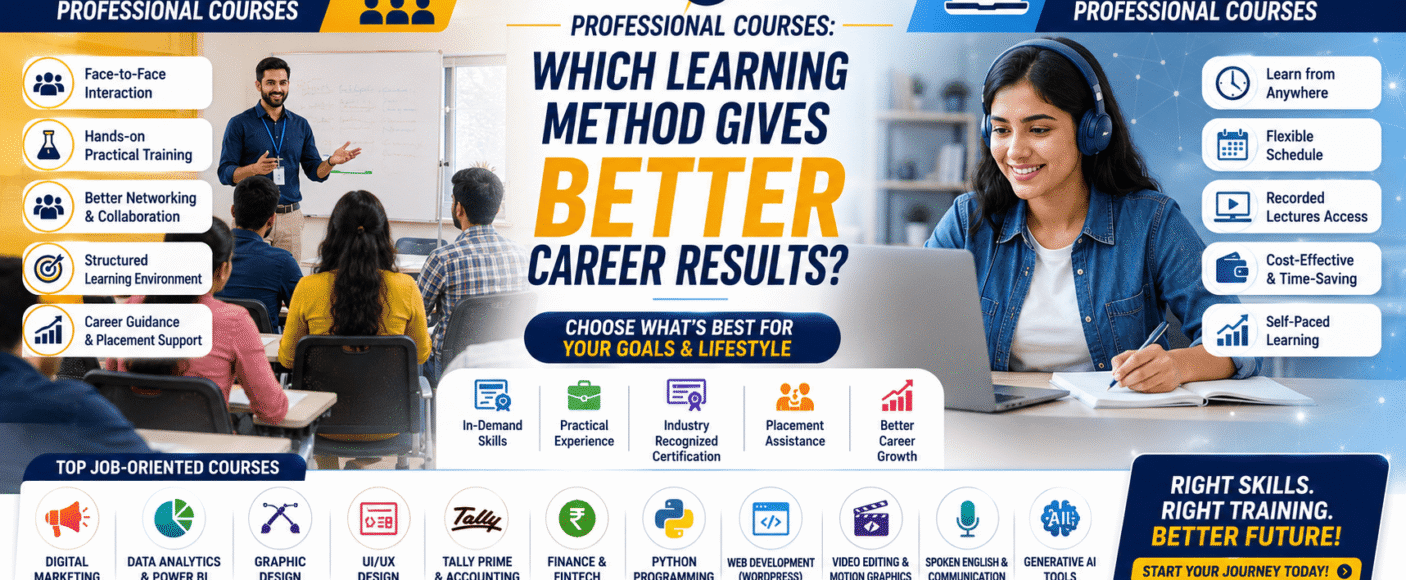
Offline vs Online Professional Courses: Which Learning Method Gives Better Career Results in 2026?
The way people learn professional skills has changed dramatically over the past few years. Online learning platforms have made education more accessible than ever, while offline classroom training continues to offer structured learning, face-to-face interaction, and hands-on practical experience.
If you’re planning to build a career in Digital Marketing, Data Analytics, UI/UX Design, Graphic Design, Tally Prime, Advanced Excel, FinTech, Python Programming, Website Development, Multimedia Animation, Motion Graphics, Video Editing, Digital AI Filmmaking, or Spoken English, one important question arises:
Should you choose an online course or an offline classroom programme?
The answer depends on your career goals, learning style, schedule, and the type of practical experience you need. This guide compares online and offline professional courses to help you make an informed decision in 2026.
Why Professional Skill Development Matters
Employers today expect candidates to have practical knowledge, problem-solving abilities, communication skills, and familiarity with industry-standard tools. Professional courses help bridge the gap between academic education and workplace requirements.
Whether you learn online or offline, your focus should be on gaining practical skills, completing real-world projects, and building a portfolio.
Understanding Online Professional Courses
Online courses are delivered through live classes, recorded lessons, virtual labs, and digital learning platforms. They allow learners to study from anywhere using a computer or mobile device.
Advantages of Online Learning
- Learn from any location
- Flexible schedules
- Self-paced study options
- Lower travel expenses
- Access to recorded lectures
- Convenient for working professionals
- Wide variety of courses
- Easy access to updated learning materials
Challenges of Online Learning
- Requires self-discipline
- Limited face-to-face interaction
- Fewer networking opportunities
- Practical sessions may vary by provider
- Home distractions can affect consistency
Understanding Offline Professional Courses
Offline courses involve classroom learning with trainers, peers, practical labs, and in-person discussions.
Advantages of Offline Learning
- Structured classroom environment
- Immediate trainer support
- Better practical demonstrations
- Group activities and discussions
- Networking with classmates
- Improved focus and accountability
- Easier access to career guidance
- Hands-on project work
Challenges of Offline Learning
- Fixed schedules
- Daily travel
- Higher commuting costs
- Less flexibility for working professionals
- Attendance requirements
Online vs Offline Professional Courses: Comparison
| Factor | Online Learning | Offline Learning |
|---|---|---|
| Flexibility | Excellent | Moderate |
| Practical Experience | Depends on the course | Often more hands-on |
| Trainer Interaction | Virtual | Face-to-face |
| Networking | Limited | Stronger |
| Classroom Discussions | Virtual | Interactive |
| Self-Discipline Required | High | Moderate |
| Convenience | Very High | Medium |
| Learning Environment | Home/Remote | Dedicated classroom |
| Career Guidance | Varies | Often more personalised |
| Placement Support | Depends on the provider | Frequently integrated with institute services |
Which Learning Method Works Best for Different Courses?
Digital Marketing
Online
Suitable for:
- Working professionals
- Freelancers
- Entrepreneurs
Offline
Ideal for:
- Live campaign practice
- Group projects
- Industry discussions
- Mentor interaction
UI/UX Design
Offline learning often provides stronger collaboration through design critiques, user research exercises, and portfolio reviews. Online learning can also be effective when combined with regular feedback and practical assignments.
Graphic Design
Both formats can work well, provided learners receive hands-on software training, portfolio guidance, and project-based learning.
Data Analytics
Whether online or offline, ensure the course includes:
- Advanced Excel
- Power BI
- Data Visualization
- Dashboard Projects
- Business Case Studies
Tally Prime & Accounting
Offline training can be beneficial for beginners who prefer guided software practice, while online courses may suit learners with prior accounting knowledge.
Python Programming
Both learning methods are effective if they include:
- Practical coding exercises
- Assignments
- Projects
- Doubt-solving sessions
Motion Graphics & Video Editing
Creative software often benefits from instructor feedback and collaborative project reviews, though high-quality online programmes can also provide extensive practical exercises.
Spoken English
Offline learning often offers more opportunities for conversation practice, presentations, and real-time speaking exercises. Online interactive classes can also be effective when participation is encouraged.
What Employers Actually Care About
Most employers focus less on how you learned and more on what you can do.
Recruiters typically evaluate:
- Practical Skills
- Project Experience
- Portfolio
- Communication
- Problem Solving
- Technical Knowledge
- Professional Behaviour
- Adaptability
The quality of your learning and practical experience generally matters more than whether the course was online or offline.
The Importance of Practical Learning
Regardless of the learning format, choose courses that include:
- Live Projects
- Case Studies
- Assignments
- Industry Software
- Portfolio Development
- Practical Assessments
Hands-on experience helps build confidence and demonstrate your capabilities to employers.
Can Online Courses Help You Get a Job?
Yes. Many professionals have built successful careers after completing online training.
Success often depends on:
- Consistent learning
- Practical project work
- Building a strong portfolio
- Internship or freelance experience
- Interview preparation
- Continuous skill development
Benefits of Offline Learning for Beginners
Offline classrooms can be particularly useful for learners who:
- Prefer structured guidance
- Need regular motivation
- Learn better through face-to-face interaction
- Want immediate support from trainers
- Value classroom discussions
Benefits of Online Learning for Working Professionals
Online learning is often suitable for:
- Full-time employees
- Business owners
- Parents
- Freelancers
- Learners in remote locations
Its flexibility allows individuals to upskill while managing other responsibilities.
Hybrid Learning: A Growing Trend
Many institutes now combine online and offline learning.
A hybrid model may include:
- Live classroom sessions
- Recorded video lectures
- Online assignments
- Practical workshops
- Mentor support
- Virtual doubt-solving
- Career counselling
This approach aims to combine flexibility with practical experience.
Why AI Skills Matter in Both Formats
Artificial Intelligence is becoming part of almost every profession.
Whichever learning method you choose, consider courses that include:
- AI Productivity Tools
- Prompt Engineering
- AI Content Creation
- Automation
- AI-Assisted Design
- AI Marketing Applications
AI literacy can improve efficiency across multiple industries.
Why Ahmedabad Is a Great Place for Professional Learning
Ahmedabad has become a growing destination for professional education because of:
- Expanding IT sector
- Startup ecosystem
- Manufacturing industries
- Financial services
- Digital businesses
- Internship opportunities
- Industry-focused training institutes
Learners can access both classroom and online programmes across multiple disciplines.
How to Choose the Right Learning Method
Before enrolling, consider these questions:
What is your schedule?
If you work full-time, online or hybrid learning may offer greater flexibility.
How do you learn best?
If you benefit from classroom interaction and immediate guidance, offline learning may be a better fit.
Does the course include practical training?
Prioritise programmes with projects, case studies, and portfolio development.
Is career support available?
Look for services such as:
- Resume guidance
- Interview preparation
- Internship support
- Career counselling
- Placement assistance
Is the curriculum updated?
Choose a programme that includes current industry tools and AI-enabled workflows.
Common Myths
Myth 1: Online Certificates Have No Value
Reality: Employers generally value practical skills, projects, and relevant experience alongside recognised certifications.
Myth 2: Offline Courses Always Lead to Better Jobs
Reality: Classroom learning offers advantages, but employment depends on your skills, portfolio, communication, and interview performance—not simply the learning format.
Myth 3: Online Learning Is Easier
Reality: Successful online learning requires discipline, time management, and consistent practice.
FAQs
1. Which is better: online or offline professional courses?
Neither is universally better. The right choice depends on your learning style, schedule, career goals, and the quality of the course.
2. Do employers prefer offline certifications?
Most employers focus on your skills, projects, portfolio, and interview performance rather than the learning mode.
3. Can I get placement assistance with online courses?
Some online institutes provide career guidance, resume support, mock interviews, and placement assistance. Services vary by provider.
4. Which courses work well online?
Digital Marketing, Data Analytics, Python Programming, Website Development, Advanced Excel, and Generative AI are commonly taught effectively online when supported by practical assignments.
5. Which courses benefit from classroom learning?
UI/UX Design, Graphic Design, Multimedia Animation, Motion Graphics, Video Editing, Spoken English, and Tally Prime often benefit from face-to-face mentoring and collaborative activities, although strong online programmes can also be effective.
6. Is hybrid learning a good option?
Yes. Hybrid learning combines the flexibility of online education with the practical benefits of classroom sessions.
7. What should I look for before enrolling?
Evaluate the curriculum, practical projects, trainer expertise, certification, career support, and opportunities to build a portfolio.
8. Is Ahmedabad a good city for professional training?
Yes. Ahmedabad offers a growing ecosystem of businesses, startups, and training institutes across digital, creative, finance, and technology sectors.
9. Can working professionals benefit from offline courses?
Yes. Many institutes offer evening or weekend classroom batches to accommodate working professionals.
10. Which learning method gives better career results?
Career success depends on the quality of your training, practical experience, continuous learning, and ability to apply your skills—not solely on whether the course was online or offline.
Conclusion
Both online and offline professional courses can help you build a successful career when they focus on practical learning, updated industry tools, and real-world application. Online learning offers flexibility and convenience, while offline learning provides structured guidance, direct interaction, and collaborative experiences.
If you plan to build a career in Digital Marketing, Data Analytics, Advanced Excel, Tally Prime, Account & Finance, FinTech, UI/UX Design, Graphic Design, Website Development, Python Programming, Multimedia Animation, Motion Graphics, Video Editing, Digital AI Filmmaking, Spoken English, or Generative AI, choose a course that emphasises practical projects, portfolio development, career guidance, and continuous skill enhancement.
Ultimately, the most successful professionals are those who remain curious, keep learning, and consistently apply their knowledge in real-world situations. The format matters—but your commitment to learning and growth matters even more.



Leave a Comment